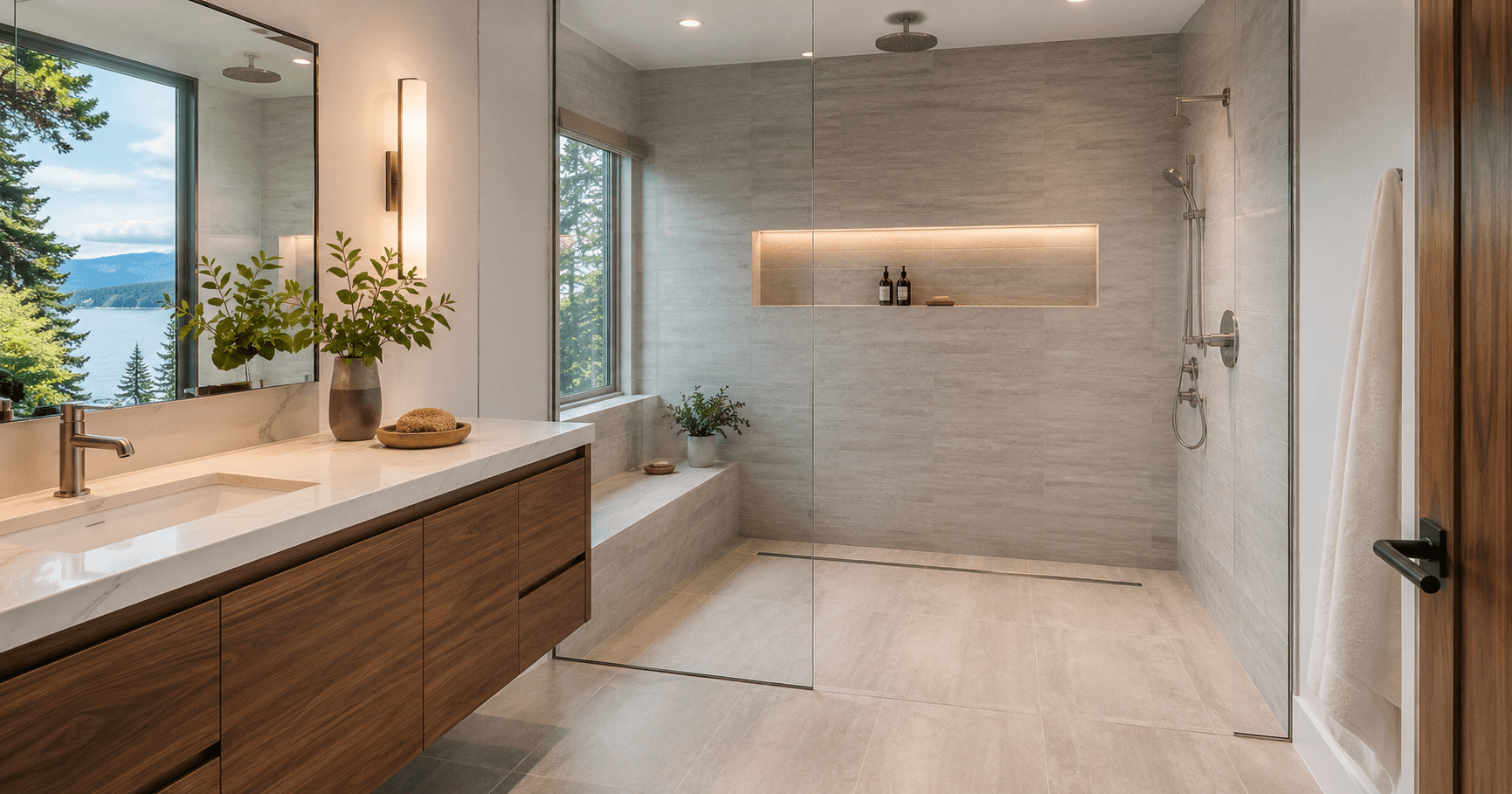
A curbless shower can make a bathroom feel open, modern, and easier to access, but it needs careful slope, drainage, waterproofing, and tile planning.
* Curbless Showers: Pros, Cons, and What They Cost
* A curbless shower can help your bathroom feel cleaner, bigger, more modern, and easier to use. Instead of stepping over a curb, the shower floor flows smoothly into the rest of the bathroom.
* Homeowners in Seattle, Kirkland, Bellevue, Redmond, Mercer Island, Sammamish, and the Eastside often consider curbless showers when remodeling because they offer a good mix of style, comfort, and accessibility.
* A curbless shower is more than just a style choice. It requires careful planning, the right slope, good waterproofing, the right drain, smart tile choices, and a layout that manages water well.
* Fine Element Construction helps homeowners plan bathroom remodels, including walk-in and curbless showers. We handle waterproofing, tile, ventilation, plumbing, permits, inspections, and all the finishing details.
* What Is a Curbless Shower?
* A curbless shower does not have a raised curb at the entry. The bathroom and shower floors meet with a low or almost level transition.
* This design creates a cleaner look and makes the shower easier to enter. It can also help the bathroom feel more open since there is less separation between the shower and the rest of the space.
* Curbless showers are popular in modern bathrooms, spa-style primary baths, aging-in-place plans, and remodels focused on accessibility.
* The One important thing to remember is that water still needs to drain properly. A curbless shower might look simple, but the slope, drain, waterproofing, and glass all need careful planning.y Homeowners Like Curbless Showers
* Most homeowners like curbless showers because they look clean and open.
* A curbles
* s shower can make a smaller bathroom feel larger and a larger bathroom feel more custom. When paired with clear glass, large-format tile, good lighting, and a simple vanity, it can create a calm and modern bathroom.
* Curbless showers are also easier to step into. This helps homeowners who want better accessibility, fewer tripping hazards, or a bathroom that stays easy to use as needs change.
* They can also be easier to clean in some designs since there is no curb to collect water, soap, or grime.
* The Main Pros of a Curbless Shower
* A curbless shower can improve both de
* sign and function.
* It creatIt gives you a smooth entry, which is helpful for accessibility and everyday comfort. It can make the bathroom feel more open and works well with modern tile, glass panels, linear drains, and spa-style designs. also support aging-in-place planning. A bathroom that is easier to enter and move through may be more practical over time.
* For resale, a well-built curbless shower can make the bathroom feel modern and well-designed. Buyers often notice when a bathroom feels clean, open, and easy to use.
* The Main Cons of a Curbless Shower
* Building a curbless shower is more challenging than building a standard shower with a curb.
* The floor must be planned so water drains properly. The shower area may need extra floor prep. Drain location, tile size, and slope all matter. Waterproofing must extend beyond the wet area.If the slope is off, water can leak into the bathroom. Weak waterproofing can cause moisture problems under the tile or behind the walls. Poor glass layout can let water splash farther than you expect.d.A curbless shower may look simple, but there is less room for error during installation.s.
* Why Waterproofing Matters So Much
* Waterproofing is always important in a shower remodel, but it matters even more with curbless showers.
* Tile and grout arTile and grout do not provide waterproofing. The materials behind and under the tile are what protect your home.er usually needs waterproofing that continues beyond the shower area because water is not stopped by a raised curb. The bathroom floor, shower floor, wall transitions, corners, and drain connection all need to be planned as one system.This is why a curbless shower is more than just a cosmetic upgrade. The hidden work is what makes the shower last.e.
* Drain and Slope Planning
* A curbless shower needs the
* right slope so water moves toward the drain.Some curbless showers use a linear drain, while others use a center drain or another layout, depending on the bathroom design. The drain you choose affects the tile layout, slope, shower glass, and the look of the floor.r.
* The shower floor cannot be completely flat. It needs to feel comfortable to stand on and still move water the right way.
* This balFinding this balance is one reason curbless showers need careful planning before construction starts.hoices for Curbless Showers
* Choosing the right tile is important in a curbless shower.
* Large tiles can give a clean, modern look, but they may be harder to slope depending on the shower design. Smaller or mosaic tiles often work better on shower floors because they follow slope changes more easily and provide better grip.
* The bathroom floor tile an
* d shower floor tile also need to work together visually and functionally.A curbless shower should look seamless, but it also needs to be safe, durable, and easy to keep clean.n.
* Accessibility BenefitsMany people choose curbless showers for better accessibility.y.
* A lower entry makes the shower easier to get into than a standard tub or a shower with a curb. This helps homeowners who want a bathroom that stays practical as they age.
* Accessibility
* planning may also include a wider shower opening, hand shower, bench, grab bar blocking inside the walls, better lighting, non-slip tile, and a layout with more open floor space.
*
* A curbless shower alone does not make a bathroom fully accessible, but it can be a key part of a more accessible design.
* When a Curbless Shower Makes Sense
* A curbless shower is a good choice when the bathroom layout allows for proper drainage, the homeowner wants a modern, open look, and the remodel includes the needed floor and waterproofingIt works well in a primary bathroom, a spa-style remodel, an aging-in-place bathroom, or when you want to remove a tub and create a bigger walk-in shower. shower.
* A curbless shower works best when the project is a full remodel, not just a quick update.
* If your bathroom already needs new tile, waterproofing, plumbing work, and a layout review, planning for a curbless shower can fit right into the project.
* When a Curbless Shower May Not Be the Best A curbless shower is not the best fit for every bathroom.atIf the current floor structure cannot be sloped properly without major work, the project can get complicated. In very small bathrooms, controlling water is harder. If the layout does not allow for good glass placement or splash control, a standard curb might be more practical.actical.
* A curbless shower may not be needed if you want a simple, lower-cost shower update and do not need the extra accessibility or design features.
* The best choice depends on your bathroom, its structure, and your project goals.
* What Affects Curbless The cost of a curbless shower depends on the scope of work, not just the shower style. sCosts can include demolition, floor prep, drain type, plumbing, waterproofing, tile choice and layout, shower glass, shower size, bench or niche details, lighting, ventilation, and any changes to the bathroom floor.o be adjusted.
* A standard shower with a curb is often simpler because the curb helps keep water in and makes the floor transition easier to handle.A curbless shower usually needs more planning and precision. This is why it can cost more than a basic shower replacement, especially if the floor needs extra work.n.
* Curbless Shower vs. Standard Walk-In Shower
* A standard wal
* k-in shower usually has a curb or threshold at the entry. A curbless shower removes that raised transition.Both types can look great and work well. A standard walk-in shower is often easier to build and control water, while a curbless shower can feel more open and easier to enter.r.You should not decide based only on looks. Think about water control, accessibility, layout, cleaning, cost, and how you will use the shower over time.e.
* For many bathrooms, a walk-in shower with a curb is still a smart choice. In the right space, a curbless shower can be a great upgrade.
* Cleaning and Maintenance
* Curbless showers are often easier to clean if they are designeThere is no curb to clean around, and a simple glass panel can make the space look less cluttered. Larger tiles can also mean fewer grout lines, depending on the design.e design.
* However, maintenance is still important. The shower needs good ventilation, regular cleaning, proper drainage, and attention to grout, caulking, glass, and corners.
* AA curbless shower is not maintenance-free. It has a cleaner design, but it still needs to be built well and cared for over time.Resale Considerations
* A well-built curbless shower can make your bathroom more appealing because it feels modern, open, and practical.Buyers may see it as a thoughtful upgrade, especially in a primary bathroom. It also supports accessibility and long-term use, which many homeowners find attractive.s.But quality is important. A curbless shower that leaks, drains poorly, or splashes water can lower your home's value instead of adding to it.t.For resale, the best curbless shower looks good, works well, and is clearly built with proper waterproofing and drainage.e.
* Bathroom Remodeling in Seattle and the Eastside
* Fine Element
* Construction provides bathroom remodeling and renovation services across the Greater Seattle Area, including Seattle, Kirkland, Bellevue, Redmond, Mercer Island, Sammamish, and nearby Eastside communities.Our team can help with curbless showers, walk-in showers, tub-to-shower conversions, tile, waterproofing, ventilation, lighting, vanities, plumbing, permits, inspections, project management, and final walkthroughs.s.
* If you are thinking about a curbless shower, start by looking at your full bathroom layout. The right design should support water control, accessibility, easy cleaning, comfort, and long-term durability.
* Thinking about a curbless shower remodel? Contact Fine Element Construction to review your bathroom layout, compare shower options, and plan a remodel that fits your daily needs and adds long-term value.