Walk-In Shower vs. Bathtub: Which Is Better for Resale?
Published July 24, 2026
Choosing between a walk-in shower and a bathtub depends on the bathroom layout, daily use, resale goals, and whether the home still has another tub.
Walk-In Shower vs. Bathtub: Which Is Better for Resale?
A common question in bathroom remodeling is whether to replace the bathtub with a walk-in shower or keep the tub for resale value.
The answer depends on the home, the bathroom, and intended use. A walk-in shower can make the space feel more open, modern, and accessible. However, a bathtub remains important for families, guests, and buyers who want at least one tub in the home.
For homeowners in Seattle, Kirkland, Bellevue, Redmond, Mercer Island, Sammamish, and the Eastside, the best choice is not about trends. It is about selecting the option that fits the layout, daily routine, and long-term value of the home.
Fine ElementFine Element Construction assists homeowners with practical layout planning, durable materials, waterproofing, tile, ventilation, fixtures, and final finishes.ecision Matters
A bathroom remodel impacts both appearance and daily functionality.
The shower or tub is usualChoosing between a shower or tub is a major decision, affecting plumbing, waterproofing, tile layout, glass, storage, cleaning, accessibility, comfort, and resale appeal.walk-in shower can make the bathroom feel larger and more practical. Keeping a bathtub can protect flexibility for families, children, guests, or future buyers who still want a tub.
That is why this decision shThis decision should consider the entire home, not just one bathroom.s Sense
A walk-in shower often makes sense in a primary bathroom, especially when the existing tub is rarely used.
Many older bathrooms have a Many older bathrooms have a tub or tub-shower combination that no longer suits the homeowner’s needs. The tub may feel cramped, difficult to access, hard to clean, or unnecessary.ower can make the bathroom feel cleaner, more open, and more comfortable for daily routines. It can also allow for better tile design, shower niches, improved lighting, glass enclosure, a hand shower, bench, or a more spacious shower layout.
For many Seattle-area homeowners, a For many Seattle-area homeowners, a walk-in shower is a practical upgrade that improves daily use as well as resale appeal.bathtub can still be important, especially if it is the only tub in the house.
Families with young children may prefer a bathtub. Some buyers also value having at least one tub, even if it is not used daily.If a home has only one bathroom with the only tub, removing it should be considered carefully. While a walk-in shower may suit the current homeowner, it could reduce appeal for future buyers.s.
Not every home must keep every bathtub, but the decision should consider the overall home layout.
The Best Rule: Keep at Least One Tub If Possible
A practical rule is to consider the entire home.
If the home has another bathtub, converting the primary bathroom tub to a walk-in shower may be appropriate. This provides a more functional primary bathroom while retaining a tub elsewhere.
If thIf the home has no other bathtub, the decision is more significant. In this case, it may be better to keep a tub in one bathroom or select a layout that maintains resale flexibility. strongest bathroom remodel decisions usually balance daily comfort with future buyer expectations.
* Primary Bathroom vs. Hall BathroomThe best choice often depends on which bathroom is being remodeled.d.In a primary bathroom, a large walk-in shower can be more valuable than an outdated, rarely used tub. Homeowners often seek a primary bathroom that feels calm, clean, and practical for daily routines.s.In a hall, guest, or family bathroom, a bathtub may be more practical. These spaces often serve children, guests, or multiple household needs.s.A tub-to-shower conversion may suit one bathroom, while keeping a tub may be better in another.r.Each bathroom should be planned according to its role in the home.e.
* Tub-to-Shower ConversionA tub-to-shower conversion involves removing an existing bathtub and installing a walk-in shower.r.This remodel is effective when the tub is outdated, difficult to use, or occupies space that could be better used for a larger shower.r.
* A tub-to-shower conversion may include new plumbing fixtures, waterproofing, tile, shower glass, niche storage, lighting, ventilation assessment, and updated finishes.
* The most important aspect is not just appearance. The shower requires proper waterproofing, slope, drain details, tile preparation, and professional installation. While a shower may look attractive, the quality of work behind the tile protects the home.
* Why Walk-In Showers Are Popular
* Walk-in showers are popular becauWalk-in showers are popular because they address practical needs., easier to clean, and more comfortable for daily use. They can also make a bathroom feel more open, especially when paired with clear glass and light tile.
* A walk-in shower can also accommodate features such as a bench, niche, hand shower, improved lighting, wider entry, or a more comfortable layout.
* For many bathroom remodels, tIn many bathroom remodels, the walk-in shower becomes the focal point of the room.Hurt Resale
* A walk-in shower can hurt resA walk-in shower may negatively impact resale if it eliminates the only bathtub in a home where buyers expect one.ry home, and it does not mean a tub is always better. But it is something to think about before making a permanent layout change.
* If the home is likely to attract families, or if the bathroom is the only full bathroom, keeping a bathtub may be advisable.
* If the home has multiple bathrooms and at least one tub remains, a walk-in shower in the primary bathroom is typically easier to justify.
* The Layout Question
* Layout is as important as fixture selection.
* A bA bathtub that makes the room feel cramped may not benefit the space. Similarly, a poorly planned walk-in shower may not improve functionality.he best layout should improve movement, storage, lighting, cleaning, ventilation, and daily comfort.
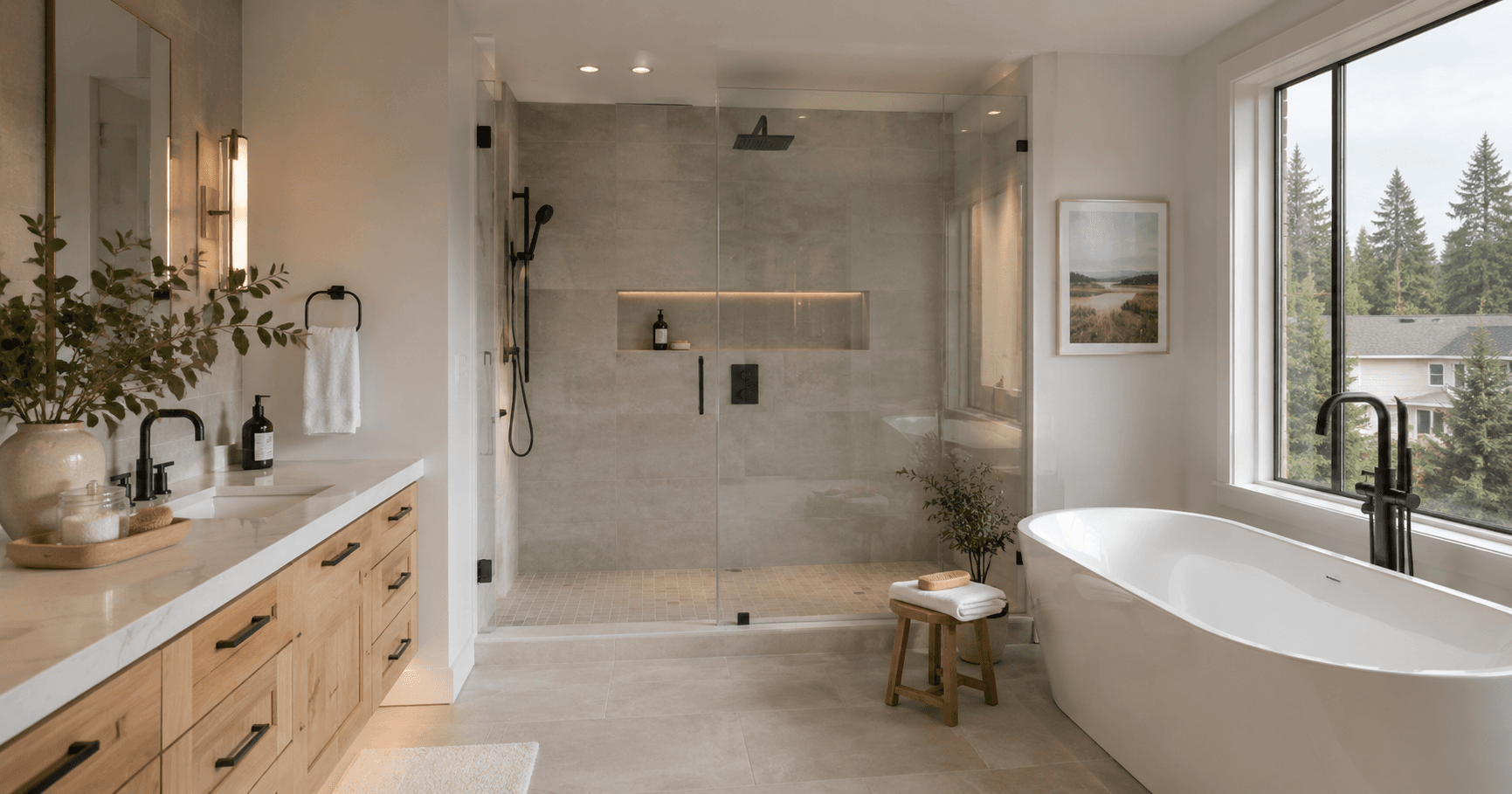
* In some cases, a large walk-in shower is best. In others, retaining a tub is preferable. If space allows, the optimal design may include both a separate shower and a freestanding tub.
* TThe objective is not to follow trends, but to improve the bathroom’s functionality.Both Shower and Bathtub Layout
* In laIn larger bathrooms, including both a walk-in shower and a bathtub may be the best option.s layout gives the homeowner daily shower comfort while keeping a tub available for resale and personal use. It can work well in larger primary bathrooms when the space allows.
* But this layout isHowever, this layout is not always practical. It requires sufficient space, proper plumbing, good lighting, ventilation, waterproofing, and a design that avoids crowding.both a shower and tub should still feel calm and balanced. Adding too much into a small room can make the remodel less functional.
* What Buyers Usually Notice
* Buyers often notice if a bathroom feels clean, updated, practical, and well built.
* They look at t
* he shower, tub, vanity, lighting, tile, storage, ventilation, and overall condition. They may also notice signs of poor waterproofing, bad caulking, weak ventilation, old fixtures, or awkward layout.
* A well-planned walk-in shower can make a bathroom feel more modern. A clean bathtub adds flexibility. Poor installation can undermine either option.
* For For resale, remodel quality is as important as the choice between shower and tub. Not Decide Only by Trend
* Walk-in showers are popular, but popularity alone should not determine the remodel.
*
* A bA bathroom remodel should be based on the home’s needs. Does the home have another tub? Is the bathroom primary or family? Is the existing tub used? Would a shower improve daily life? Would removing the tub limit future buyers?hese questions matter more than following a design trend.
* A successful bathroom remodel should make the home more functional, not just more stylish.
* Bathroom Remodeling in Seattle and the Eastside
* Fine Element Construction offers bathroom remodeling and renovation services throughout the Greater Seattle Area, including Seattle, Kirkland, Bellevue, Redmond, Mercer Island, Sammamish, and nearby Eastside communities.
* Our team assists with bathroom planning, tub-to-shower conversions, walk-in showers, bathtubs, vanities, tile, lighting, ventilation, waterproofing, plumbing coordination, permits, inspections, project management, and final walkthroughs.
* IIf you are deciding between a walk-in shower and a bathtub, begin by considering the entire home layout. A walk-in shower may suit a primary bathroom if another tub remains in the home. If it is the only tub, keeping it may be preferable.Thinking Considering a bathroom remodel? Contact Fine Element Construction to review your layout, compare shower and tub options, and plan a bathroom that supports daily life and long-term value.