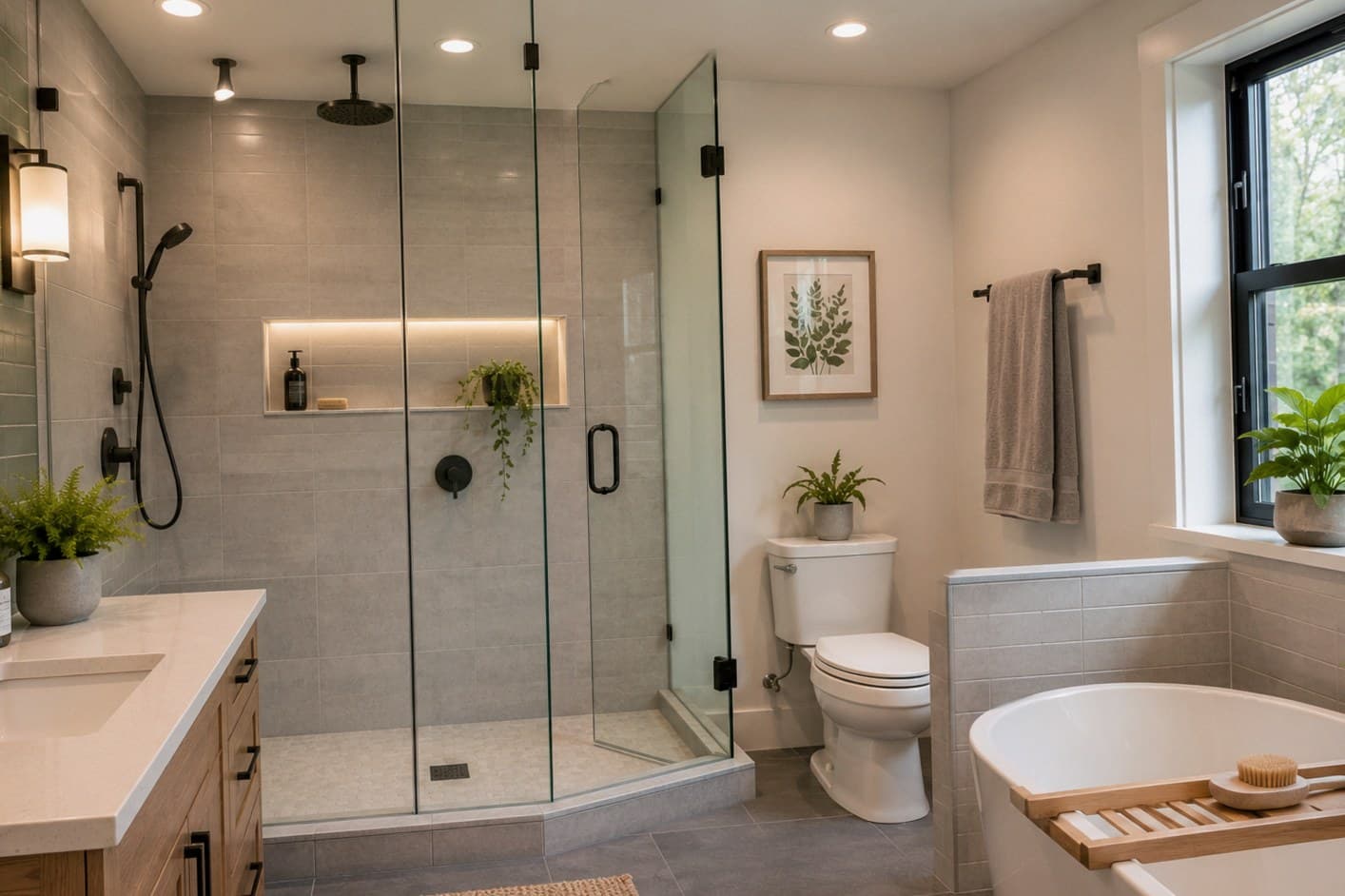
How to Prevent Mold in Pacific Northwest Bathrooms
Published August 18, 2026
Pacific Northwest bathrooms need good ventilation, waterproofing, drainage, tile planning, and daily moisture control to help reduce mold risk.
# How to Prevent Mold in Pacific Northwest Bathrooms
Bathrooms deal with moisture every day. In the Pacific Northwest, keeping that moisture under control can take a little more thought.
Homes around Seattle, Kirkland, Bellevue, Redmond, Mercer Island, Sammamish, and the Eastside spend much of the year in cool, damp weather. After a hot shower, a bathroom may take longer to dry than homeowners expect, especially if ventilation is weak or the room has limited airflow.
The answer is not a special paint, stronger cleaner, or one particular type of tile. Mold prevention starts with how the bathroom handles water from beginning to end: ventilation, waterproofing, drainage, shower design, materials, and everyday use all play a part.
Fine Element Construction works with homeowners on bathroom remodels that can include ventilation, waterproofing, walk-in and curbless showers, tile, vanities, lighting, plumbing coordination, permits, inspections, and finish work.
Why Pacific Northwest Bathrooms Stay Damp
Every shower adds moisture to the room.
Steam settles on mirrors, walls, ceilings, tile, glass, towels, and other surfaces. Some of it disappears quickly, but moisture can remain in grout lines, corners, fabrics, and poorly ventilated areas long after the mirror looks clear.
That matters in the Pacific Northwest because the surrounding air is often already humid. During long stretches of wet weather, simply opening a door or window may not dry the room as quickly as it would in a warmer, drier climate.
Older houses can add another layer of difficulty. Many were built before bathroom ventilation became the priority it is today. A fan may be undersized, badly located, connected to restrictive ductwork, or installed as part of an earlier renovation.
The goal is simple: once someone finishes using the shower, the room should have a reliable way to dry.
Moisture Is the Real Problem
Mold needs moisture, so the best prevention strategy is to limit how long surfaces stay wet.
Bathroom moisture can come from obvious sources such as shower steam and splashing, but also from small leaks, condensation, cracked caulk, poor drainage, failed waterproofing, wet towels, or water trapped behind finishes.
A bathroom will never stay completely dry. It does not need to.
What matters is whether normal moisture can leave the room instead of lingering day after day.
That distinction is important when remodeling. A bathroom that looks beautiful but regularly stays damp has a design problem that finishes alone will not solve.
Start With the Bathroom Fan
A properly working exhaust fan is one of the most useful tools for controlling bathroom moisture.
If the fan is too weak, poorly located, excessively noisy, or not ducted correctly to the exterior, steam can remain in the room and settle on surrounding surfaces.
Over time, repeated moisture exposure can affect paint, drywall, caulking, grout, trim, cabinetry, and areas that are harder to see.
Ventilation deserves particular attention in:
* bathrooms without windows
* large primary bathrooms
* bathrooms with oversized walk-in showers
* basement bathrooms
* small bathrooms with limited airflow
* older homes with existing ventilation systems
During a remodel, it makes sense to review the fan and ducting before the new ceiling and finishes are completed.
Do Not Turn the Fan Off Too Soon
Having a fan only helps if it runs long enough to remove the moisture left behind after a shower.
A common habit is to switch it off when leaving the room. By then the mirror may already be clearing, but tile, grout, towels, ceilings, and corners can still be damp.
A timer switch makes this easier. Instead of remembering to return and turn the fan off later, the homeowner can set it to continue running after the bathroom is empty.
Humidity-sensing controls are another option worth considering during a remodel, particularly in bathrooms where the fan is frequently forgotten.
The point is not to run the fan endlessly. It is to give the room enough time to dry.
A Window Helps, but It Does Not Replace Ventilation
Windows are useful in bathrooms. They bring in daylight, can improve airflow, and make the room feel less enclosed.
They are not always a dependable moisture-control system.
When the outdoor air is already damp, opening a window may provide less drying than expected. It also depends on weather, temperature, wind, and whether anyone remembers to open it.
Mechanical ventilation gives the bathroom a more consistent way to move moist air outside.
A good design can use both, but a window should not be the only plan for handling shower steam.
What Is Behind the Tile Matters More Than the Tile
One of the biggest misconceptions in bathroom remodeling is that tile itself makes a shower waterproof.
It does not.
Tile and grout are the visible finish. The actual water protection comes from the system underneath and around them.
That system becomes particularly important in showers, tub surrounds, niches, benches, curbless entries, and other areas that are exposed to water every day.
A properly planned shower considers the entire wet area together:
* walls
* shower floor
* corners
* penetrations
* drain
* niches
* benches
* transitions
* glass placement
The final tile may be what everyone sees, but much of the work that protects the bathroom disappears once the project is finished.
Pay Attention to Niches and Benches
Shower niches and benches are useful features, but they introduce additional horizontal surfaces and transitions inside the wet area.
Those details need to be planned rather than treated as decorative add-ons.
Water should not be left sitting on the bottom of a niche or on top of a shower bench. The framing, waterproofing, slope, tile installation, and surrounding joints all need to direct water where it belongs.
This is especially important in showers that are used every day.
A niche that looks simple after installation may require careful work behind the tile to perform properly over time.
Curbless Showers Need a Water-Control Plan
Curbless showers have become popular because they create an open appearance and remove the raised threshold between the shower and bathroom floor.
They can work very well, but eliminating the curb also means the rest of the shower design has to control water effectively.
Floor slope, drain location, waterproofing, shower dimensions, glass placement, tile, and surrounding floor conditions all affect the result.
If those elements are not coordinated, water can move farther into the bathroom than intended.
Before choosing a curbless design, the contractor should consider the existing floor structure, available height, drain location, shower layout, and how the water will be contained.
The design should work with the room instead of being forced into a space that cannot support it properly.
Grout and Caulk Still Need Maintenance
Even a well-built bathroom is not maintenance-free.
Caulk can eventually crack, separate, shrink, or wear. Grout and tile need regular cleaning. Shower corners, tub edges, glass transitions, niches, and other joints should be checked occasionally for signs of deterioration.
Small failures are easier to deal with early.
If a gap begins letting water into a place that was meant to stay dry, ignoring it can turn a small maintenance job into a much larger repair.
Mold prevention therefore does not end when the remodel is complete. How the bathroom is maintained affects how well it performs over the years.
Choose Bathroom Materials for Real-Life Use
A material can look great in a showroom and still be wrong for a particular bathroom.
The amount of moisture, ventilation, cleaning, and daily use should influence what goes into the room.
Paint needs to suit a bathroom environment. Cabinet finishes should tolerate regular humidity. Flooring should make sense around water. Tile and grout should be selected with both appearance and maintenance in mind.
Wood can be used successfully in some bathroom applications, but placement and finish matter.
Natural stone can also work beautifully, although certain materials require more maintenance.
Wallpaper may be an easy choice for a powder room and a more complicated one for a heavily used bathroom with a shower.
The best choice is not automatically the most expensive material. It is the one that fits the way the room will actually be used.
Lighting Makes Moisture Problems Easier to Spot
Lighting will not stop mold from developing, but it can make early warning signs easier to notice.
In a dark bathroom, stained grout, peeling paint, damaged caulk, damp corners, or small areas of discoloration can go unnoticed.
Good general lighting, vanity lighting, and appropriate shower lighting make cleaning and routine inspection easier.
That is particularly useful during darker Pacific Northwest months, when natural light may already be limited.
A brighter bathroom is not only about appearance. It is easier to see what is happening in the room.
Give Wet Towels Somewhere to Dry
Construction is only part of the moisture equation.
Wet towels piled on the floor, thick bath mats that stay damp, and shower curtains left bunched together can hold moisture in the room for hours.
A thoughtful remodel can make those daily habits easier to manage.
Enough towel bars, hooks, practical storage, and space around wet items can help them dry instead of remaining folded or piled together.
These are small design decisions, but bathrooms are used every day. Small improvements can make a noticeable difference over time.
Take Small Leaks Seriously
A leak does not need to be dramatic to cause damage.
Water may slowly escape around a toilet, vanity, tub, shower enclosure, plumbing connection, or damaged joint without creating an obvious puddle.
Possible warning signs include:
* recurring staining
* soft or swollen flooring
* loose tile
* peeling paint
* deteriorating trim
* persistent musty odors
* dark areas around caulk
* moisture near the toilet or vanity
None of these signs proves that mold is present. They do suggest that something deserves a closer look.
Water can also travel behind finishes, which means the visible symptom is not always directly beside the source.
Older Seattle Homes Deserve a Closer Look
Bathrooms in older homes often combine original construction with one or more previous renovations.
Behind the finished surfaces, there may be old framing, plaster, aging plumbing, limited insulation, older ventilation, or materials installed during different periods of the home's history.
A fan may have been added years later without an ideal duct route. A shower may have been remodeled before modern waterproofing methods were used. Old leaks may have been repaired cosmetically without addressing the underlying condition.
When an older bathroom is remodeled, opening the walls and floor creates an opportunity to look at those hidden components before everything is covered again.
Ventilation, plumbing, waterproofing, insulation, subfloor conditions, and signs of previous water damage are all worth reviewing at that stage.
Basement Bathrooms Have Their Own Challenges
Basement bathrooms often have less natural airflow and may already sit in an area where moisture requires extra attention.
If the basement has an existing dampness problem, adding a new bathroom does not solve it.
The source of the moisture should be understood first.
Bathroom ventilation, plumbing, waterproofing, flooring, and wall materials should then be planned around the conditions of the space.
This is especially important when a finished basement is being created in an older home.
Covering an existing moisture problem with new drywall, flooring, and tile may hide it temporarily, but it does not remove the cause.
Bigger Showers Create More Moisture
Large walk-in showers are comfortable, but they also create more wet surface area and can produce a significant amount of steam.
The ventilation system needs to match the room and the way the shower is used.
The shower itself also needs reliable drainage, waterproofing, and enough airflow to dry after use.
Details such as benches, multiple niches, large glass panels, multiple shower heads, and curbless entries can affect how water and steam behave inside the space.
That does not make large showers a poor choice. It simply means their moisture demands need to be considered as part of the design.
Small Bathrooms Can Stay Damp Quickly
A small bathroom has less air volume and often fewer places for moisture to disperse.
Add a shower, several wet towels, limited natural light, and a weak exhaust fan, and the room can remain humid well after use.
Good ventilation becomes especially valuable in a compact space.
Layout matters too. Tight corners and crowded fixtures can create areas with very little air movement.
Simple finishes, useful lighting, easy-to-clean surfaces, and a layout that does not trap wet items can all make a small bathroom easier to live with and maintain.
When Is a Remodel Worth Considering?
Not every moisture issue means a bathroom needs to be torn apart.
Sometimes the solution may be better ventilation, replacing failed caulk, repairing a small leak, or changing a few everyday habits.
A larger renovation becomes more reasonable when problems keep returning or there are signs that the issue goes beyond the surface.
That may include:
* repeated moisture damage
* failed shower waterproofing
* soft or damaged flooring
* deteriorated drywall
* inadequate ventilation
* older plumbing problems
* damaged shower construction
* ongoing leaks behind finishes
If the same area keeps failing after surface repairs, the source may need to be addressed rather than cleaned or patched again.
A Remodel Is the Best Time to Fix Hidden Moisture Problems
Once a bathroom has been stripped back for renovation, parts of the room that are normally inaccessible become visible.
The contractor can inspect framing and subfloor conditions, review plumbing, assess existing ventilation, look for old water damage, and plan a new waterproofing system before the finishes go back in.
It is also the right time to reconsider details that are difficult to change later:
* fan and duct placement
* shower drainage
* niches and benches
* curbless transitions
* lighting
* plumbing locations
* insulation
* storage for wet towels
* waterproofing around the wet area
Many of the decisions that help a bathroom handle moisture are invisible once the project is finished.
That is precisely why they should be addressed while the room is open.
What to Do After the Remodel
Good construction gives the bathroom a strong starting point. Everyday habits help keep it that way.
Run the exhaust fan during and after showers. Give wet towels and bath mats room to dry. Keep shower corners and glass clean. Check caulk periodically. Pay attention to new stains, odors, or recurring dampness.
Most importantly, do not ignore leaks simply because they seem small.
A bathroom that is built to handle water and given enough time to dry is much easier to maintain.
Bathroom Remodeling for Pacific Northwest Homes
Fine Element Construction provides bathroom remodeling and renovation services throughout the Greater Seattle area, including Seattle, Kirkland, Bellevue, Redmond, Mercer Island, Sammamish, and nearby Eastside communities.
Bathroom projects can include ventilation, waterproofing, walk-in showers, curbless showers, niches, benches, tile, lighting, vanities, plumbing coordination, permitting, inspections, project management, and finish work.
When it comes to moisture, the goal is straightforward: water should stay where it belongs, and the bathroom should be able to dry after normal use.
If your bathroom regularly stays damp, has a musty smell, shows signs of recurring moisture damage, or simply needs a better layout, contact Fine Element Construction to discuss the ventilation, waterproofing, shower design, and materials before the space is rebuilt.