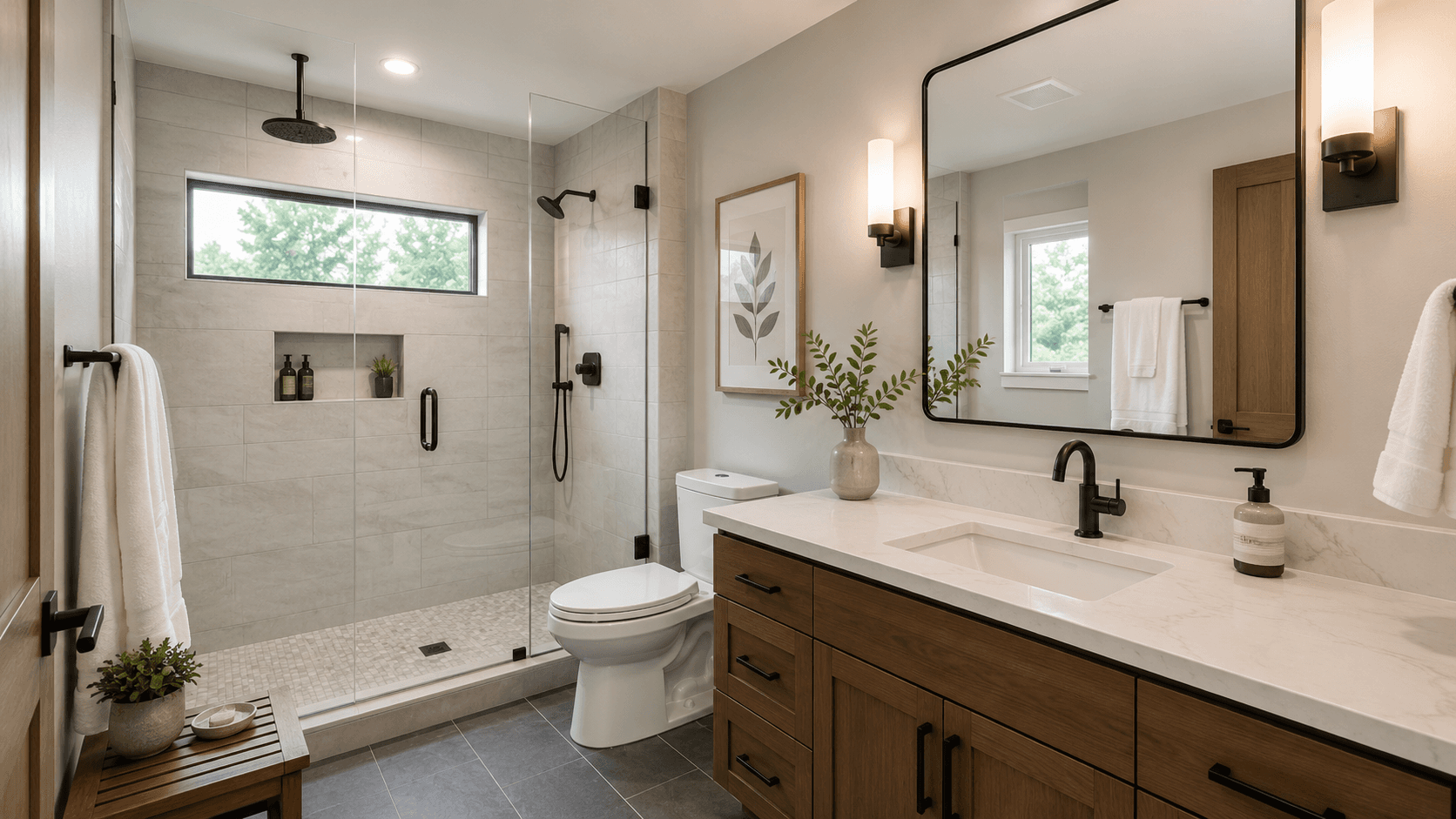
A full bathroom remodel in Seattle takes careful planning, material coordination, permits, inspections, and a clear construction schedule.
* How Long Does a Bathroom Remodel Take?
* A standard hall or guest bathroom remodel typically takes 3 to 6 weeks. Larger primary bathrooms with layout changes, custom tile, walk-in showers, heated floors, or special finishes may require 5 to 8 weeks or more.
* Construction is only one phase of the process. Including design, planning, permits, material orders, and scheduling, a bathroom remodel in Seattle or the Eastside typically takes 3 to 5 months from the initial meeting to the final walkthrough.
* Understanding the entire process before demolition is essential. The timeline often depends on decisions and material selections made in advance.
* Fine Element Construction partners with homeowners in Seattle, Kirkland, Bellevue, Redmond, Mercer Island, Sammamish, and surrounding Eastside areas to plan bathroom remodels. We ensure you have a clear schedule, required permits, realistic timelines, and all materials in place before construction begins.
* The Full Bathroom Remodel Timeline
* Every bathroom remodel begins with planning and design, which typically takes 2 to 6 weeks depending on how quickly you finalize the scope, layout, materials, fixtures, and finishes.
* Obtaining permits can take a few days to several weeks, depending on your city and project size. Simple remodels are faster, while projects with structural or layout changes require more review and time.
* Material lead times significantly affect your schedule. Tile, vanities, fixtures, lighting, shower glass, hardware, and special finishes may take several weeks to arrive, with custom or semi-custom items requiring even longer. Construction typically begins once the scope is defined, permits are secured, and key materials are on site. Starting demolition before all materials are ready often leads to delays.
* Phase 1: Design, Scope, and Selections
* The first phase is planning. Here, the remodeler determines what will remain, what will change, and what must be ordered before construction. This includes decisions on the shower or tub, vanity size, tile, plumbing fixtures, lighting, mirrors, ventilation, paint colors, hardware, and storage. Early selections are critical to prevent delays and budget confusion. A clear plan keeps the project on track and ensures everyone knows what to expect.
* Phase 2: Permits and Pre-Construction
* Not every cosmetic bathroom update needs a permit, but most full bathroom remodels may require permits when plumbing, electrical work, ventilation, layout changes, or major construction are involved.
* In Seattle, some bathroom remodels may qualify for a streamlined permit process, while more complex projects can take longer. In Kirkland, Bellevue, Redmond, Sammamish, Mercer Island, and other Eastside cities, the permit process may run through local city departments or MyBuildingPermit.com.
* DurinDuring pre-construction, the schedule is finalized, materials are verified, and the project is prepared for demolition. Careful planning at this stage helps prevent major delays once work begins.e construction starts, the first step is usually demolition. The old tile, vanity, fixtures, flooring, shower, tub, drywall, or damaged materials are removed depending on the project scope.
* This phase may also reveal hidden issues. Older homes inThis phase may also reveal hidden issues. Older homes in Seattle and the Eastside often have outdated plumbing, old electrical systems, water damage, uneven framing, poor ventilation, or subfloor problems. Work at this stage includes plumbing, electrical, ventilation, framing adjustments, and preparing the space for the new bathroom layout. If your project requires moving the shower, toilet, vanity, lighting, fan, or electrical outlets, this step will require additional time and effort.losed. Inspectors need to see plumbing, electrical, and other work before drywall, tile backer board, or finished surfaces cover it.
* After rough-in work passes inspection, the next steps are wall preparation, waterproofing, and shower preparation. This is one of the most critical stages of the remodel.
* A shower can look beautiful on the outside, but the waterproofing system behind the tile is what protects the home from leaks and long-term damage.
* Do not rush this step. Proper waterproofing, slope, drain preparation, and base work are essential to make sure your bathroom lasts.
* Tiling is often one of the most time-consuming aspects of a bathroom remodel. It requires careful layout, cutting, setting, curing, grouting, and cleanup.
* Large-format tile, shower niches, accent walls, curbless showers, intricate patterns, and custom layouts can extend the timeline. Simple tile layouts are completed more quickly than detailed designs.
* After tile and flooring, the project moves into finish work. This may include installing the vanity, toilet, faucets, mirrors, lighting, shower trim, towel bars, hardware, paint touch-ups, and other final details.
* Shower glass is typically measured after tile installation, so it may arrive later in the schedule. This is standard and should be accounted for during initial planPhase 6: Final Inspection and Walkthrough. The final phase includes inspection, completion of punch list items, cleanup, and a walkthrough with the homeowner. The punch list may include touch-ups, adjustments, caulking, hardware alignment, paint corrections, or final fixture checks. A professional remodeler should review the finished bathroom with you, explain warranty details, answer your questions, and ensure the space is ready to use.to use.
* This final step is essential, as a remodel is not complete until all details are addressed.
* Common delays include late material selections, backordered tile or fixtures, long lead times for custom vanities, permit or inspection delays, hidden damage, and change orders during construction.
* Change orders pose significant risks to the timeline. Even minor changes after demolition can impact plumbing, electrical work, tile layout, materials, labor, and inspections.
* Starting demolition before materials are ready is another common cause of delay. The bathroom mayremainy unfinished while you wait for tile, fixtures, shower glass, or cabinetry. While good planningcannott prevent every surprise, itsignificantlyy reduces theriske of avoidable delay.s.
* How to Keep Your Bathroom Remodel on Schedule
* The most effective way to keep a bathroom remodel on schedule is to make key decisions before construction begins.
* Select tile, fixtures, vanity, lighting, mirrors, hardware, paint colors, and shower details early. Confirm permit requirements. Ensure the contractor has a written schedule and is aware of inspection timelines.
* Working with a single remodeling team that manages design, permits, materials, construction, inspections, and the final walkthrough streamlines the process.
* Coordinating all aspects before demolitiongreatly increases the likelihood of a smooth projecty. Can you use the bathroom during the remode?l?
* In moInIn most cases, the bathroIn most cases, the bathroom under renovation will be out of service during construction. If your home has more than one bathroom, this is usually manageable. If you have only one bathroom, discuss temporary options with your contractor before signing the contract. Knowing when the bathroom will be unavailable allows you to prepare in advance.n Seattle and the Eastside
* Bathroom remodel timelines in Seattle and the Eastside depend on project scope, home age, permit requirements, material lead times, and the level of finish detail.
* A simple bathroom renovation may proceed quickly if the layout remains unchanged. A full remodel involving a new shower layout, plumbing or electrical changes, custom tile, and inspections will require more time.
* Fine Element Construction provides bathroom remodeling and renovation services across the Greater Seattle Area, including Seattle, Kirkland, Bellevue, Redmond, Mercer Island, Sammamish, and nearby communities.
* Our team assists with bathroom planning, design, permits, inspections, demolition, plumbing coordination, electrical work, ventilation, waterproofing, tile, vanities, lighting, and final walkthroughs.
* If you are considering a bathroom remodel, contact Fine Element Construction to review your project scope, plan your timeline, and receive a clear estimate before construction begins.