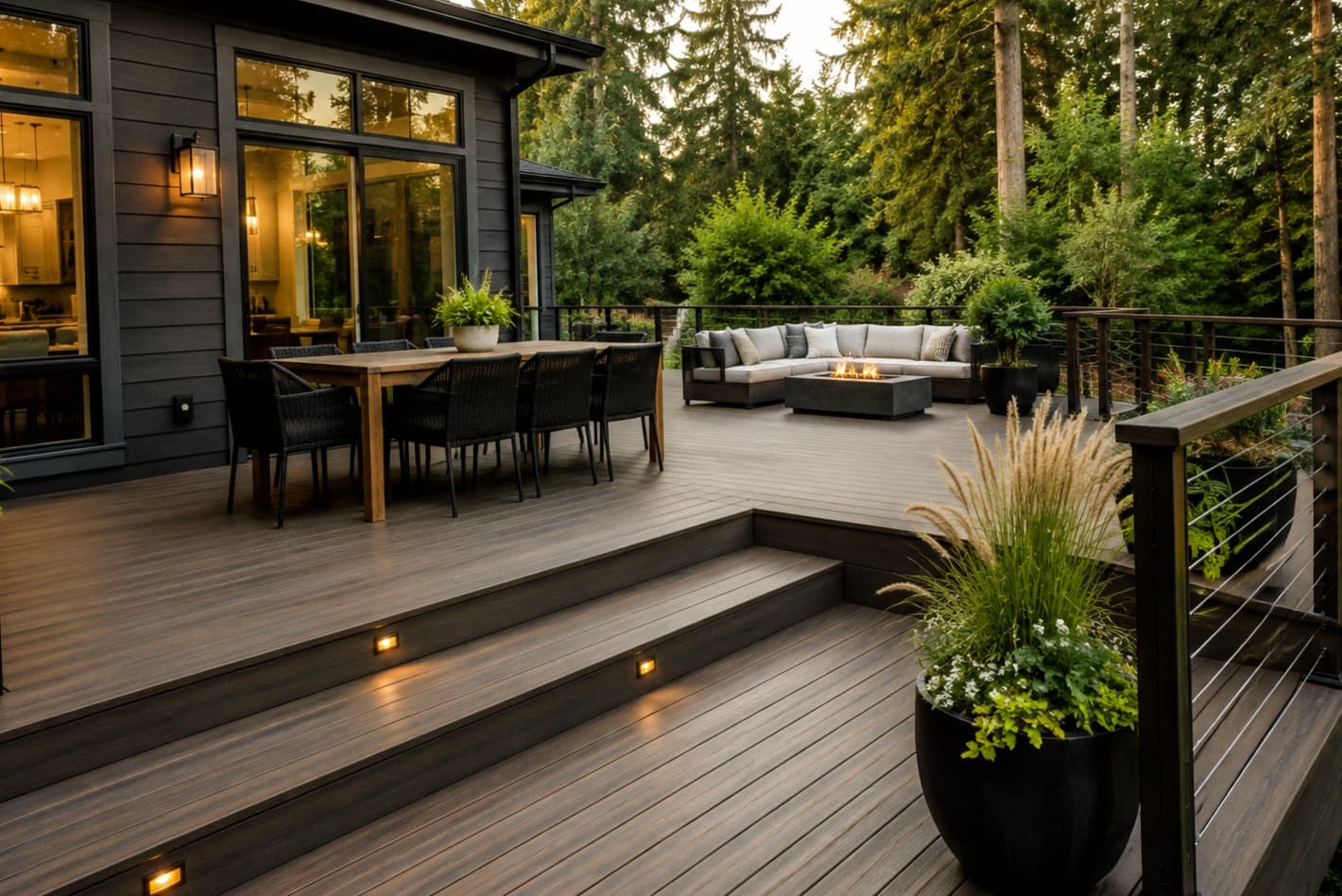
How Much Does a New Deck Cost in Washington? (2026)
Published August 25, 2026
Deck cost in Washington depends on size, material, height, stairs, railings, footings, permits, site access, framing condition, and the level of finish.
How Much Does a New Deck Cost in Washington? (2026)
A new deck can change how a home feels outside. It can create space for grilling, dining, morning coffee, family time, summer evenings, and a better connection to the backyard.
But deck cost in Washington can vary a lot.
A small ground-level wood deck is very different from a large elevated composite deck with stairs, railings, lighting, and difficult site access. The material matters, but it is only one part of the price.
For homeowners in Seattle, Kirkland, Bellevue, Redmond, Mercer Island, Sammamish, and the Eastside, deck pricing should be planned around the actual site, the size of the deck, the height above grade, the material, the railing system, permit needs, and how the deck connects to the home.
Fine Element Construction helps homeowners plan deck projects, exterior updates, repairs, remodeling, and renovation work across the Greater Seattle Area.
The Simple Answer
In Washington, a professionally built deck can range from a modest backyard platform to a much larger investment.
A simple pressure-treated wood deck may sit in the lower cost range. A mid-range cedar or composite deck usually costs more. A larger elevated deck with stairs, premium railing, structural work, waterproofing details, or difficult access can move into a higher range quickly.
A useful way to think about deck cost is by tiers:
Basic deck:
A smaller ground-level or low-height deck with pressure-treated framing, simple decking, and a straightforward layout.
Mid-range deck:
A larger backyard deck with better materials, composite decking, railing, stairs, and a cleaner finished look.
Premium deck:
An elevated or more complex deck with composite or premium decking, custom railings, stairs, lighting, privacy details, waterproofing, or challenging site conditions.
The final price should come from a real estimate, not a generic square-foot number.
Why Deck Costs Vary So Much
Deck cost changes because every deck is built around the home and the site.
A flat backyard with easy access is simpler than a sloped lot. A ground-level deck is simpler than a second-story deck. A rectangle is simpler than a deck with multiple levels, stairs, curves, built-in seating, or custom railings.
Material also matters. Pressure-treated wood, cedar, composite decking, PVC, hardwood, and aluminum systems all have different material costs and maintenance expectations.
The structure underneath matters too. Posts, beams, joists, footings, hardware, ledger connection, flashing, stairs, and railings are not optional details. They are what make the deck safe and durable.
Deck Size and Square Footage
Size is one of the biggest cost drivers.
A 120-square-foot deck will usually cost less than a 400-square-foot deck, but the cost does not always scale perfectly. Some fixed costs are present on almost every project, such as setup, planning, delivery, layout, footings, hardware, and inspections.
A larger deck needs more decking boards, framing, fasteners, railing, labor, and possibly more footings.
Before choosing a size, think about how the deck will be used. A small sitting deck may work for two chairs and a table. A family dining deck needs more space. A deck for entertaining may need room for seating, grill zones, circulation, and stairs.
The best deck size is not always the biggest one. It is the one that fits the home and daily use.
Common Deck Size Examples
A small deck may be around 120 to 180 square feet. This can work for a compact seating area, small grill zone, or simple backyard connection.
A medium deck may be around 250 to 350 square feet. This size can often support a dining table, grill, and some seating.
A larger deck may be 400 square feet or more. This can work well for outdoor living, entertaining, multiple seating zones, or a stronger indoor-outdoor connection.
The square footage is only the starting point. Height, stairs, railing, material, and site conditions can change the cost just as much as size.
Pressure-Treated Wood Decks
Pressure-treated wood is usually the budget starting point for many deck projects.
It can be a practical choice when the homeowner wants a functional deck and wants to keep the initial cost lower. It is commonly used for framing and may also be used as the visible decking surface on more budget-conscious builds.
The tradeoff is maintenance. Wood decks need cleaning, sealing, staining, and regular care. In Washington’s wet climate, moisture, moss, and seasonal weather can affect wood over time.
Pressure-treated wood can make sense when cost matters most, but homeowners should understand the maintenance before choosing it.
Cedar Decks
Cedar has a natural look that fits many Pacific Northwest homes.
It feels warmer and more organic than many synthetic materials. It can look especially good near trees, older homes, Craftsman-style homes, and natural landscaping.
The downside is that cedar needs care. It can weather, stain, split, absorb moisture, and require periodic maintenance. In damp or shaded areas, cedar may need more attention than homeowners expect.
Cedar can be beautiful, but it is not a maintenance-free option.
Composite Decking
Composite decking is popular because it reduces maintenance compared with natural wood.
It does not need the same staining and sealing routine as wood, and it can hold up better against moisture when installed correctly. Many homeowners choose composite because they want a cleaner finished look and less yearly upkeep.
Composite usually costs more up front than pressure-treated wood. The final price depends on the brand, board line, color, fastening system, framing needs, stairs, and railing.
For many Washington homeowners, composite decking is a strong mid-range or premium option because it fits the wet Pacific Northwest climate better than a deck material that needs constant maintenance.
PVC and Premium Decking
PVC and other premium decking options can cost more, but they may offer strong moisture resistance and lower maintenance.
These products may make sense for homeowners who want a long-term deck, a cleaner finish, or a material that performs well in damp conditions.
The main question is whether the premium material fits the budget and the home. A high-end deck surface may not be worth it if the framing, railings, stairs, and details are not also planned well.
A deck should be built as a full system, not just a surface material.
Deck Height
Height affects cost quickly.
A ground-level deck is usually simpler. A raised deck needs more structure, longer posts, stronger bracing, stairs, railings, inspections, and careful connection details.
An elevated deck may also need engineering or additional permit review depending on the scope and local rules.
The higher the deck, the more important the structure becomes.
This is one reason a simple square-foot price can be misleading. A 300-square-foot ground-level deck and a 300-square-foot elevated deck can be very different projects.
Railings
Railings are one of the biggest visible cost factors.
A low ground-level deck may not need the same railing scope as an elevated deck. A raised deck may need guardrails, stair railings, and code-compliant details.
Railing material also matters. Wood railings are usually more budget-friendly. Metal, cable, glass, composite, and custom railing systems can increase cost.
Railings affect safety, style, views, maintenance, and the finished look of the deck. They should be selected with the home’s exterior, yard, and daily use in mind.
Stairs
Stairs can add a lot to a deck project.
A few simple steps to the yard are not the same as a long stair run from an elevated deck. Stairs require framing, treads, stringers, landings, railings, footings, and careful layout.
Stair placement also affects how the deck connects to the yard.
A poorly placed stair can make the deck less useful. A well-placed stair can improve traffic flow, outdoor access, and how the backyard functions.
Footings and Site Conditions
Footings are part of what makes a deck safe and stable.
Soil, slope, drainage, access, tree roots, existing concrete, old deck removal, and property conditions can all affect footing work.
A deck on a simple flat site is easier than a deck on a steep or tight lot.
In many Washington neighborhoods, backyards can be sloped, shaded, wet, or difficult to access with materials. That can affect labor and schedule.
Site access is one of the reasons two decks with the same size and material can have different prices.
Permits and Inspections
Decks may require permits depending on the city, deck height, roof deck condition, structural scope, and how the deck is connected to the home.
In Seattle, a deck that is more than 18 inches above ground or a roof deck may need a construction permit. Other cities in Washington may have their own rules and review processes.
Permit planning can affect cost and schedule, but it also creates a cleaner record for the home.
For homeowners in Seattle, Kirkland, Bellevue, Redmond, Mercer Island, Sammamish, and nearby areas, permit requirements should be checked before construction begins.
Existing Deck Removal
If the project replaces an old deck, removal needs to be included.
Old deck demolition can reveal rot, poor ledger flashing, weak framing, unsafe stairs, bad footings, water damage, or structural shortcuts from previous work.
Sometimes the old deck can be removed cleanly. Other times, the condition of the house connection, siding, framing, or foundation area needs review.
A replacement deck estimate should include what happens to the existing structure.
Framing Condition
The framing under the deck matters as much as the surface boards.
Some homeowners want to replace only the decking boards, but the framing may not be in good enough condition to keep. Joists, beams, posts, ledger boards, hardware, and footings all need review.
Putting new composite decking on weak old framing is usually not a good investment.
A deck should be evaluated as a system. If the frame is old, undersized, damaged, or poorly flashed, it may need repair or replacement before the new surface is installed.
Ledger and Flashing
The ledger is where an attached deck connects to the house.
This is one of the most important areas of the project. If the ledger is not installed and flashed correctly, water can get behind it and damage the home.
In Washington’s wet climate, flashing details are especially important.
A deck can look good from the outside while hiding water problems at the house connection. That is why this detail deserves attention during planning and inspection.
Decking Material and Maintenance
The cheapest deck material is not always the cheapest long-term choice.
Wood may cost less up front, but it usually needs more maintenance. Composite or PVC may cost more up front, but it can reduce staining, sealing, and ongoing upkeep.
The right choice depends on the homeowner’s budget, how much maintenance they want, the amount of shade, rain exposure, and how long they plan to stay in the home.
In the Pacific Northwest, maintenance should be part of the cost conversation from the beginning.
Covered Decks
A covered deck can be useful in Washington because it allows outdoor space to be used more often during wet weather.
But adding a cover changes the project. It can involve structural design, posts, roofing, drainage, lighting, gutters, and permits.
A covered deck usually costs more than an uncovered deck, but it may add more year-round value for the homeowner.
The cover should be designed with the home’s roofline, exterior style, and drainage in mind.
Built-In Seating and Features
Built-in seating, planters, privacy screens, lighting, fire features, and outdoor kitchens can make a deck more useful and attractive.
They also add cost.
These features should be planned early because they can affect framing, electrical work, railing, layout, and material orders.
A simple deck can always be furnished later. Built-in features are best when they solve a real use problem, not just because they look good in photos.
Low-Maintenance Deck Design
Low maintenance does not mean no maintenance.
A low-maintenance deck usually uses composite or PVC decking, proper drainage, good airflow, durable fasteners, clean railing details, and materials that handle moisture well.
It should also avoid design choices that trap leaves, dirt, water, or moss.
In Washington, a good low-maintenance deck should be easy to sweep, wash, and inspect.
Where to Save
Homeowners can sometimes save money by keeping the deck shape simple, avoiding unnecessary levels, using standard railing, limiting built-in features, and choosing a material that fits the budget.
Keeping the deck at a practical size can also help. A deck that is too large may cost more without adding much daily value.
The goal is not to build the cheapest deck. The goal is to avoid spending money on features that do not improve how the deck is used.
Where Not to Save
Do not save money by cutting corners on structure, footings, ledger connection, flashing, railings, stairs, or permits.
These are not decorative details. They affect safety, durability, and how the deck performs in wet weather.
A deck is exposed to rain, sun, movement, people, furniture, grills, and seasonal changes. The hidden structure needs to be solid.
A cheaper deck can become expensive if it fails early or damages the house.
Deck Cost by Project Type
A basic ground-level deck usually costs less because the structure is simpler and the railing needs may be lower.
A mid-range backyard deck costs more when it includes composite decking, stairs, railing, and a better finished appearance.
An elevated deck usually costs more because it needs more structure, stairs, guardrails, footings, and inspection planning.
A premium deck can cost more when it includes high-end composite or PVC decking, custom railing, lighting, privacy features, built-in seating, covered areas, or difficult site access.
These categories are more useful than one flat price because they show why deck estimates vary.
How to Budget for a New Deck
Start with the size and purpose.
How many people should the deck support? Will it be used for dining, grilling, lounging, or entertaining? Does it need stairs? Does it need a railing? Will it be attached to the house? Is the yard sloped? Do you want wood, cedar, composite, or PVC?
Then plan for the parts homeowners often forget: demolition, permits, stairs, railings, footings, flashing, delivery, disposal, and site access.
A realistic deck budget includes the whole project, not just the surface boards.
Best Deck Material for Washington
For many Washington homeowners, composite decking is a strong choice because it reduces maintenance and handles moisture better than natural wood when properly installed.
Pressure-treated wood can still work when budget matters most. Cedar can look beautiful but needs more care. PVC or premium decking may be worth considering for homeowners who want a longer-term, lower-maintenance surface.
The best material depends on the home, shade, rain exposure, budget, maintenance expectations, and design goals.
Decks in Seattle and the Eastside
Fine Element Construction provides deck planning, deck replacement, exterior repair, remodeling, and renovation services across the Greater Seattle Area, including Seattle, Kirkland, Bellevue, Redmond, Mercer Island, Sammamish, and nearby Eastside communities.
Our team helps homeowners review deck size, material options, framing condition, stairs, railings, permits, site access, and how the deck connects to the home and yard.
A new deck should feel good to use, not just look good on the day it is finished. The right plan should balance cost, structure, materials, maintenance, safety, and outdoor living.
Thinking about building or replacing a deck? Contact Fine Element Construction to review your space, compare materials, and plan a deck that fits your home and Washington’s climate.