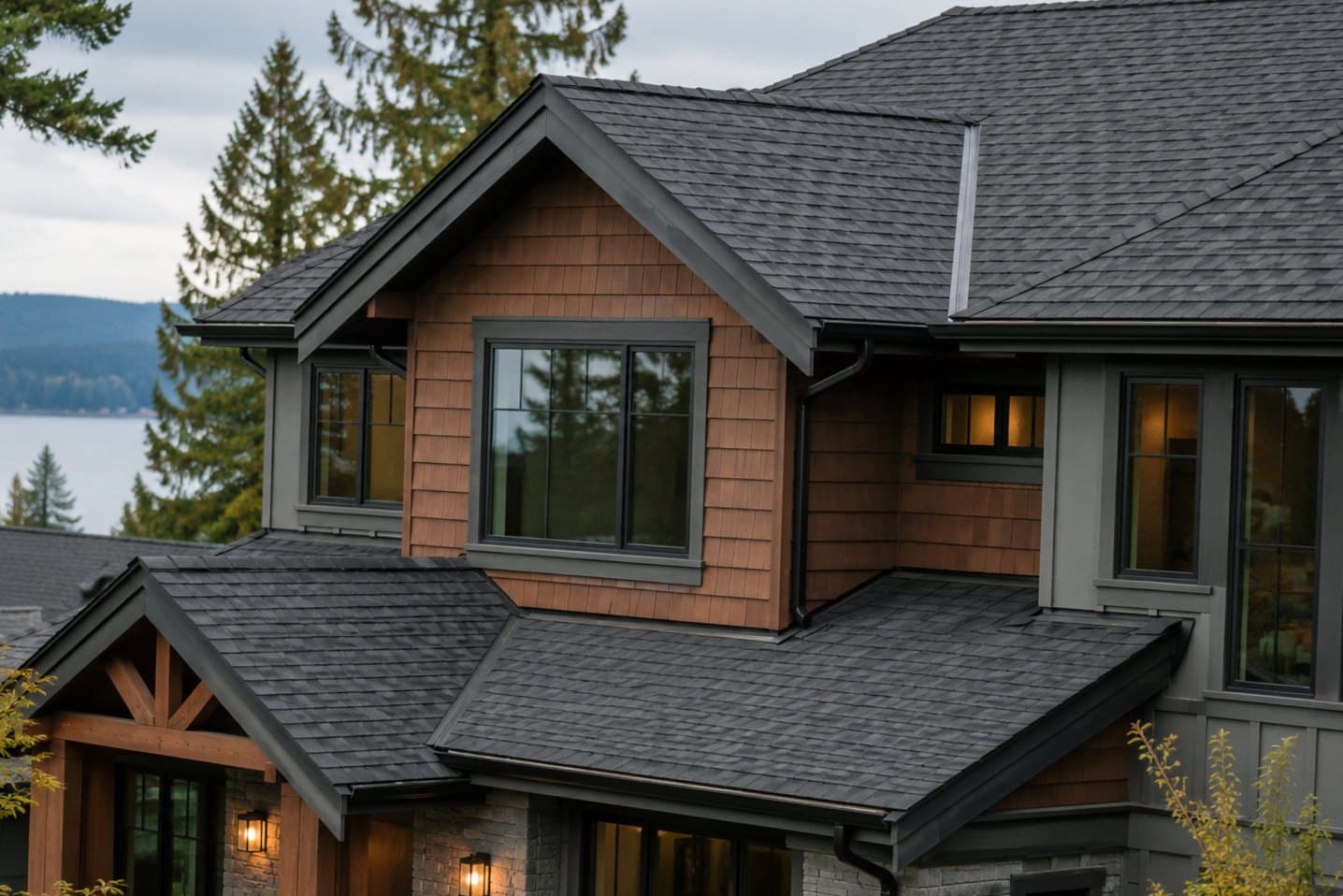
The best roofing material for a Seattle home depends on rain exposure, roof slope, moss risk, ventilation, tree coverage, budget, maintenance, and long-term plans.
Best Roofing Materials for the Seattle Climate
A roof in Seattle has a harder job than many homeowners think. It does not just need to look good from the street. It has to handle long wet seasons, moss, tree debris, wind-driven rain, shade, damp air, and the occasional stretch of snow or ice.
That is why the best roofing material for a Seattle home is not always the most expensive one. It is the material that fits the roof slope, neighborhood, tree coverage, maintenance expectations, budget, and how long the homeowner plans to stay in the house.
For homeowners in Seattle, Kirkland, Bellevue, Redmond, Mercer Island, Sammamish, and the Eastside, roofing decisions should be made around the Pacific Northwest climate first. A roof that works well in a dry, sunny market may not be the best choice here.
Fine Element Construction helps homeowners with roofing, exterior repair, remodeling, restoration, and full-home renovation work across the Greater Seattle Area.
Why Seattle Roofing Is Different
Seattle roofing is mostly about moisture management.
Rain is the obvious issue, but the real challenge is how long moisture stays on the roof. Shaded roofs, overhanging trees, clogged gutters, poor attic ventilation, low-slope sections, and north-facing roof planes can all hold moisture longer.
That moisture can encourage moss, algae staining, granule loss, soft wood, damaged flashing, and leaks around roof penetrations.
A good roof system needs more than shingles. It needs proper underlayment, flashing, ventilation, gutters, drainage, and installation details that match the home.
Start With the Roof, Not the Material
Before choosing a roofing material, look at the roof itself.
What is the slope? How much shade does it get? Are there trees nearby? Does the roof have valleys where debris collects? Are there skylights, chimneys, vents, dormers, or flat sections? Is the attic ventilated properly? Are there signs of past leaks?
These questions matter because the same roofing material can perform differently on two different homes.
A steep, open roof with good sun exposure is not the same as a shaded roof under firs and maples. A simple gable roof is not the same as a complicated roof with valleys, low-slope areas, and multiple penetrations.
The best roofing material depends on the whole roof system.
Architectural Asphalt Shingles
Architectural asphalt shingles are one of the most common roofing choices in the Seattle area.
They are popular because they balance cost, appearance, availability, and performance. They come in many colors and profiles, and they work well on many standard pitched roofs when installed correctly.
For many homeowners, architectural shingles are the practical middle ground. They are usually more substantial than basic 3-tab shingles and can give the home a cleaner, more dimensional look.
In the Seattle climate, the key is choosing a quality shingle, installing it properly, planning ventilation, keeping gutters clear, and staying ahead of moss.
Why Asphalt Shingles Work for Many Seattle Homes
Asphalt shingles work well when the roof has a good slope, proper ventilation, clean flashing, and regular maintenance.
They are usually easier to source and install than more specialized materials. They also tend to be more budget-friendly than metal, slate, or premium composite options.
For a homeowner who wants a dependable roof without moving into a premium material tier, architectural asphalt shingles are often the first material to compare.
They are not maintenance-free. In the Pacific Northwest, moss and debris still need attention. But with the right product and care, they can be a strong choice.
Where Asphalt Shingles Struggle
Asphalt shingles can struggle when moisture sits too long.
Heavy shade, thick moss, poor attic ventilation, clogged gutters, and low-slope areas can shorten roof life. Moss can lift shingles, trap moisture, and wear down the roof surface.
This is why a roof inspection should look beyond the shingles themselves. If the home has poor ventilation or chronic moss conditions, simply installing new shingles without solving those issues may not be enough.
A better roof project looks at the full system.
Metal Roofing
Metal roofing is one of the strongest options for the Pacific Northwest climate.
It sheds water quickly, resists moss better than many rougher surfaces, and can last a long time when properly installed. It can also work well on modern homes, cabins, certain Craftsman-style homes, and homes where the owner wants a long-term roofing solution.
Standing seam metal roofs are often the cleanest and most durable metal option, but they cost more than standard asphalt shingles.
Metal can be a smart choice when the homeowner plans to stay in the home for many years, wants lower maintenance, or has a roof that deals with heavy rain and tree coverage.
Metal Roofing Pros
The biggest advantage of metal roofing is long-term performance.
A well-installed metal roof handles rain well. It does not give moss the same surface to grab onto as easily as some other materials. It can create a clean, modern look and may reduce the need for frequent roof replacement.
Metal also works well in many Pacific Northwest settings because it fits the region’s mix of rain, trees, and modern exterior design.
For homes with the right architecture and budget, metal can be a strong investment.
Metal Roofing Cons
Metal roofing is not the right answer for every home.
It usually costs more up front than architectural asphalt shingles. It also needs experienced installation, careful flashing details, proper fastening, and good planning around penetrations, valleys, gutters, and snow or ice conditions.
Some homeowners also do not like the look of metal on certain traditional homes. The material should fit the house, not fight it.
Metal roofing can be excellent, but it needs the right installer and the right design context.
Cedar Shake Roofing
Cedar shake has a long history in the Pacific Northwest.
It can look beautiful on the right home. It has warmth, texture, and a natural character that fits many older Seattle homes and traditional neighborhoods.
But cedar is not a low-maintenance roof in this climate.
Seattle’s wet, shaded conditions can be hard on cedar. Moss, moisture, splitting, cupping, and organic debris can all become problems if the roof is not maintained carefully.
Cedar can still make sense for certain homes, especially when the look is important and the homeowner understands the maintenance. But it should not be chosen only because it feels classic.
Cedar Shake Pros
Cedar has a natural appearance that many synthetic materials try to imitate.
It can add character to older homes, cottages, Craftsman-style homes, and homes where the exterior design depends on natural texture.
In the right setting, cedar can look warm and authentic.
For some homeowners, that appearance is worth the extra care.
Cedar Shake Cons
The downside is maintenance.
Cedar needs regular attention in wet climates. It can hold moisture, grow moss, and age unevenly if the roof does not get enough airflow and cleaning. It may also be more vulnerable under heavy shade or tree debris.
For homeowners who want a “set it and forget it” roof, cedar is usually not the best choice.
It is a beautiful material, but it requires commitment.
Composite Roofing Materials
Composite roofing materials are designed to imitate the appearance of slate, cedar, or other premium materials while offering more predictable performance.
These products can be a good option when the homeowner wants a more distinctive look than asphalt but does not want the maintenance of natural cedar or the weight and cost of true slate.
Composite roofing can work well on certain homes, but product quality, warranty details, installer experience, and local performance history matter.
This is not a category to choose casually. It should be compared carefully against asphalt, metal, and the actual design goals of the home.
Synthetic Slate and Shake Looks
Synthetic slate or shake-style roofing can give a home a premium appearance.
This may be useful for homeowners who want a classic look with less maintenance than natural materials.
The key is making sure the product fits the home’s roof pitch, climate exposure, warranty requirements, and installation details.
Some synthetic materials look better than others. A sample board is not always enough. It helps to see real installed projects if possible.
Flat and Low-Slope Roofing
Not every roof section should use shingles.
Some Seattle homes have flat or low-slope areas over additions, porches, garages, dormers, or modern extensions. These areas need the right roofing system for the slope.
Low-slope sections may need membrane roofing instead of standard shingles. The exact material depends on the roof design, drainage, penetrations, insulation, and how the area connects to the rest of the home.
This is where roof slope matters. A material that works on a pitched roof may fail on a low-slope area.
A good roofing plan identifies these areas before choosing materials.
Tile and Slate
Tile and slate can be beautiful, but they are not the default choice for most Seattle-area homes.
Natural slate can last a long time, but it is heavy, expensive, and requires specialized installation. Clay or concrete tile also adds weight and may not fit every home structurally or stylistically.
These materials can work in the right situation, but they should be reviewed carefully.
For most homeowners, architectural asphalt shingles, metal roofing, composite products, or proper low-slope systems will be more realistic choices.
Moss Resistance Matters
Moss is one of the biggest roofing concerns in the Seattle climate.
A shaded roof under trees is more likely to develop moss than a sunny, open roof. Moss can hold moisture and interfere with normal water shedding.
Some materials resist moss better than others, but no roof is completely immune if the conditions are right.
Material choice helps, but maintenance still matters. Tree trimming, gutter cleaning, debris removal, roof-safe moss treatment, and good ventilation can all extend roof life.
Ventilation Is Part of the Roof System
Attic ventilation affects roof performance.
Poor ventilation can trap heat and moisture under the roof deck. That can contribute to condensation, mold, sheathing damage, and premature roof aging.
A roof replacement is a good time to review intake and exhaust ventilation. Ridge vents, soffit vents, baffles, and attic airflow should be evaluated as part of the system.
A strong shingle installed over a poorly ventilated attic may not perform the way the homeowner expects.
Flashing Is More Important Than Most People Think
Many roof leaks happen around details, not in the middle of the roof field.
Chimneys, skylights, valleys, walls, vents, dormers, roof edges, and transitions need careful flashing. In Seattle’s wet climate, these details matter.
A good roofing material can still fail if the flashing is weak.
This is why the contractor and installation details are just as important as the material brand.
Gutters and Drainage
A roof also depends on gutters and drainage.
If gutters are clogged, undersized, or poorly sloped, water can back up, overflow, and damage fascia, siding, landscaping, and foundation areas.
In tree-heavy Seattle neighborhoods, gutter maintenance is part of roof care.
When replacing a roof, it is smart to review gutters, downspouts, fascia, and drainage at the same time.
Best Roofing Material for Most Seattle Homes
For many Seattle and Eastside homes, architectural asphalt shingles are the best value choice.
They offer a practical balance of appearance, cost, availability, and performance when the roof has the right slope and the system is installed correctly.
The best result usually comes from choosing a quality shingle, using proper underlayment, installing clean flashing, confirming ventilation, and maintaining the roof after installation.
Asphalt shingles are not the most premium option, but they are often the most sensible.
Best Premium Roofing Material
For homeowners who want a longer-term upgrade, metal roofing is often the strongest premium option.
It performs well in rain, sheds water quickly, resists moss better than many materials, and can give the home a clean, modern look.
The higher upfront cost can make sense when the homeowner plans to stay in the home long term or wants a roof with lower maintenance needs.
The key is proper installation. Metal roofing is not a place to cut corners.
Best Material for Older Seattle Homes
Older Seattle homes need roofing materials that respect the home’s character.
Architectural asphalt shingles can work well when the color and profile fit the house. Cedar may look historically appropriate, but it requires more care. Composite shake may be worth considering when the homeowner wants a cedar-like look with less maintenance.
Metal can also work on some older homes, but it should be chosen carefully so it does not feel disconnected from the architecture.
The right roof should protect the home and still look like it belongs.
Best Material for Tree-Covered Homes
Homes with heavy tree coverage need extra care.
Moss, needles, leaves, branches, and shade all affect roof performance. In those conditions, metal roofing may be worth considering because it sheds debris and moisture more easily.
Architectural shingles can still work, but maintenance becomes more important. The homeowner should plan for regular cleaning, gutter care, and moss control.
Cedar is usually more demanding in heavily shaded conditions.
Best Material for Budget-Conscious Projects
For budget-conscious homeowners, architectural asphalt shingles are usually the starting point.
They provide a strong balance of cost and performance for many pitched roofs. The homeowner can often get a clean, updated look without moving into the cost of metal or premium composite roofing.
The important thing is not to choose the cheapest shingle and ignore the system. Underlayment, flashing, ventilation, and installation quality still matter.
A lower-cost roof can become expensive quickly if the details are poor.
What Affects Roofing Cost?
Roofing cost depends on more than the material.
The final price can be affected by roof size, pitch, height, layers to remove, sheathing condition, underlayment, ventilation, flashing, skylights, chimneys, valleys, gutters, access, disposal, material choice, and local labor.
A simple single-story roof is very different from a steep roof with multiple dormers, skylights, chimneys, and tree coverage.
This is why price ranges should be treated carefully. A real estimate needs the roof to be inspected.
Where Not to Save
Do not save money by ignoring ventilation, flashing, underlayment, or damaged roof decking.
Those items may not be visible from the street, but they decide how the roof performs.
It is also risky to choose a contractor only by the lowest bid. A roof is not just a surface product. It is a weather system for the home.
The cheapest roof can become the most expensive one if it leaks, traps moisture, or fails early.
Roofing and Remodeling Together
Roofing often connects to other remodeling work.
If the home also needs gutters, siding repair, attic ventilation, insulation, skylight replacement, chimney work, or interior water damage repair, it may be smarter to coordinate the work instead of treating each item separately.
This is especially true in older homes where roof leaks may have affected framing, drywall, insulation, or ceilings.
A roofing project can protect the rest of the remodel.
Questions to Ask Before Choosing a Roof
Before choosing a roofing material, ask a few practical questions.
How shaded is the roof? How steep is it? Are there low-slope sections? Is attic ventilation working? Are gutters in good condition? Are there skylights or chimneys? How long do you plan to stay in the home? Do you want the lowest upfront cost or the best long-term performance?
The best roofing material becomes clearer when those questions are answered.
Roofing Materials in Seattle and the Eastside
Fine Element Construction provides roofing, exterior repair, remodeling, and renovation services across the Greater Seattle Area, including Seattle, Kirkland, Bellevue, Redmond, Mercer Island, Sammamish, and nearby Eastside communities.
Our team helps homeowners review roof condition, compare roofing materials, plan repairs, coordinate related exterior work, and protect the home from Pacific Northwest moisture.
For many homes, architectural asphalt shingles are the best value. For long-term performance, metal roofing is worth considering. For character homes, cedar or composite shake may be part of the conversation. For low-slope areas, the material needs to match the roof design.
Thinking about replacing your roof? Contact Fine Element Construction to review your roof, compare material options, and choose a system that fits your home, budget, and Seattle’s climate.