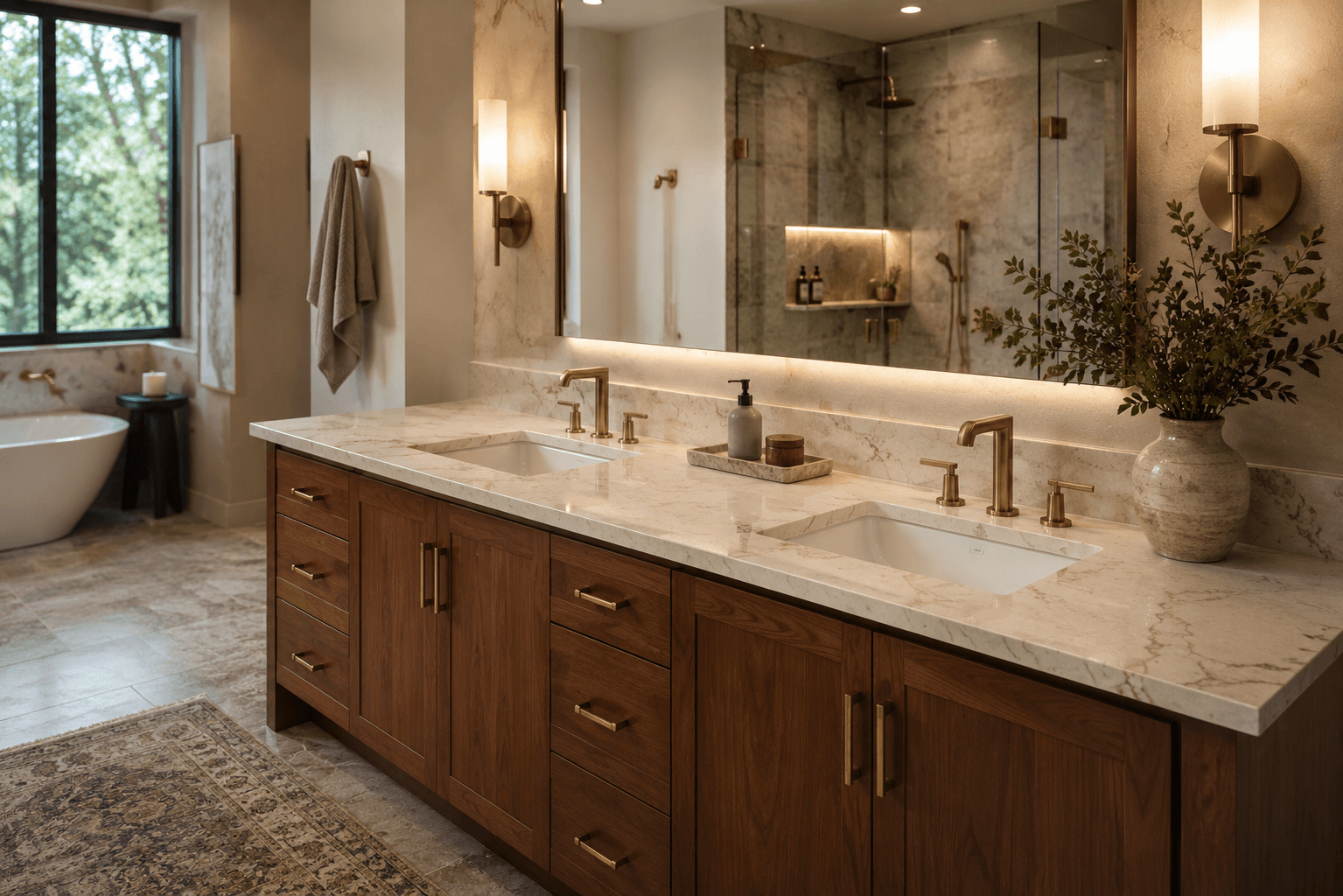
The best bathroom countertop material depends on moisture resistance, daily use, cleaning, style, durability, and how the vanity fits the remodel.
* Best Countertop Materials for Bathrooms
* Bathroom countertops should look nice, but they also need to stand up to water, toothpaste, soap, cosmetics, cleaning products, daily use, and humidity without being hard to take care of.
* If you live in Seattle, Kirkland, Bellevue, Redmond, Mercer Island, Sammamish, or the Eastside, the best bathroom countertop for your home depends on your bathroom type, budget, vanity size, design style, cleaning habits, and how you use the space each day.
* A main bathroom might need a bigger double vanity with a tough surface and a more upscale look. For a family bathroom, something easy to clean and durable is often best. Powder rooms usually get less water and wear, so you can show more design personality there.
* Fine Element Construction helps homeowners plan bathroom remodels, including vanities, countertops, tile, lighting, mirrors, storage, waterproofing, ventilation, plumbing, permits, inspections, and finishing touches.
* What Makes a Good Bathroom Countertop?
* A good bathroom countertop needs to be tough, resist moisture, easy to clean, and right for the space.
* BathBathrooms are not like kitchens. Bathroom counters do not have to handle hot pans or heavy cooking, but they do face water, soap, lotions, cosmetics, razors, hair tools, toothpaste, cleaning products, and lots of humidity.e right surface should also fit the vanity, sink style, faucet layout, mirror, lighting, tile, and overall bathroom design.
* Do not pick a countertop just because it looks good. It should also work well for how you use your bathroom.
* Quartz Countertops
* Quartz is one of the strongest all-around choices for bathroom countertops.
* IPeople like quartz because it is strong, easy to care for, and comes in many colors and patterns. Depending on what you choose, it can look modern, natural, or classic.Quartz works well in primary bathrooms, family bathrooms, guest bathrooms, and powder rooms. It pairs nicely with warm wood vanities, white vanities, stone-look tile, modern lighting, and clean plumbing fixtures.
* If you want a countertop that looks polished but is not hard to maintain, quartz is usually a safe bet.
* The key is to pick a quartz color and pattern that matches your whole bathroom. A bold pattern might look great at first, but it can feel too busy in a small space.
* Natural Stone Countertops
* Natural stone can give your bathroom a more custom and high-end feel.
* Granite,Granite, marble, quartzite, and other stones each look different and need different care. Natural stone adds depth and character that you might not get with man-made materials.can work especially well in a primary bathroom or powder room where the homeowner wants a more elevated desThe downside is maintenance. Some natural stones need sealing and careful cleaning. Marble looks great, but it can stain or scratch more easily than other choices.tions.
* Natural stone is best if you love the look and do not mind taking care of it the right way.
* Quartzite Countertops
* Quartzite is a natural stone thatQuartzite is a natural stone that gives a high-end look and is very durable if you choose and seal it well.ers want the natural movement of stone but prefer something that can feel stronger than marble.
* Quartzite works well in a high-end main bathroom, especially with warm wood vanities, neutral tile, elegant lighting, and a spa-like setup.
* Like any natural stone, you should choose quartzite carefully. Each slab is different, and the final look depends on the material, edge style, sink cutouts, and how well it is installed.
* Marble Countertops
* Marble is a classic choice for bathroom countertops.
* Marble can make a bathroom feel elegant and timeless. It is a great fit for powder rooms, guest baths, or main bathrooms if you appreciate its natural look and are okay with the upkeep.
* The downside is that marble is more delicate than many other materials. It can stain orscratch from some products, and may show wearasr tim goes on.e.
* Some people like how marble ages naturally, while others want a surface that stays the same over time.
* If you want something low-maintenance, quartz that looks like marble might be a better option.
* Granite Countertops
* Granite is tough and works well for bathroom countertops, especially if you pick the right slab and finish.
* It is a natural material, so each pieSince granite is natural, every piece looks a little different. It is a practical choice if you want stone but need something more durable and less delicate than marble.older granite patterns can make a bathroom feel dated, while cleaner, simpler slabs can work well in modern or transitional remodels.
* Granite is a good choice if it matches your vanity, tile, lighting, and the overall style of your bathroom.
* Porcelain Countertops
* Porcelain is becoPorcelain is showing up more often in modern bathroom designs. can create a clean, sleek look and can be very durable when properly fabricated and installed. They can mimic stone, concrete, or other surfaces while offering a refined modern appearance.
* Porcelain Porcelain works well in modern bathrooms, spa-like main bathrooms, and designs with big tiles or simple lines. thing to understand is that fabrication and installation quality matter. Porcelain slabs need proper handling, edge planning, and installer experience.
* For the right bathrIn the right bathroom, porcelain can give you a very clean and high-end look.ntertops
* Solid surface countertops are a practical choice for bathrooms.
* They are usually smooth, simple, and easy to clean. Solid surface works well in guest baths, hall baths, rentals, or remodels where you want a clean look without the cost or hassle of natural stone.
* Solid surfacSolid surface might not feel as high-end as quartz or stone, but it is a good choice if you care most about budget, easy care, and simple design.od option when the bathroom needs to look fresh and functional without becoming overbuilt for the home.
* Laminate Countertops
*
* Laminate is usually the most affordable bathroom countertop option.
* Modern laminate is better than many people think. It works for bathrooms that do not get much use, laundry rooms, rentals, or projects where you need to keep costs down.
* The downside is that laminate does not add as much value as quartz, stone, or porcelain. It can also get water damage if seams, edges, or sink areas are not sealed well.
* Laminate can work in some cases, but it is usually not the top pick for a high-end main bathroom remodel.
* Wood CouWood can make a bathroom feel warm and beautiful, but you need to think it through carefully.ideratiBathrooms are wet places. A wood countertop needs to be sealed well, looked after, and set up so water does not sit on it every day.blem.
* Wood often works better as an accent or in a powder room that does not get much use, rather than in a busy family bathroom.
* If you love the warmth of wood, using a wood vanity with a quartz or stone countertop is often a more practical way to get that look without putting wood in the wettest spot.
* Concrete Countertops
* Concrete countertops can create a custom, modern look, but the
* y are not the easiest bathroom countertop option.
* They need sealing, careful making, and regular care. In a small bathroom or one with bold tile, concrete can also look heavy.
* Concrete may work for a very specific design style, but most homeowners looking for durability and easy cleaning will usually compare quartz, stone, porcelain, or solid surface first.
* Best Countertop for a Primary For a main bathroom, quartz, quartzite, natural stone, or porcelain are usually the best choices.t options.
* A main bathroom usually has a bigger vanity, gets used more, and has higher design goals. The countertop should look good, work for daily routines, and fit the rest of the remodel.Quartz is often the safest all-around pick because it is tough and easy to care for. Quartzite or natural stone are good if you want a more high-end, natural look. Porcelain works well in a modern, spa-like bathroom.m.
* The right choice depend
* s on the vanity, tile, lighting, sinks, faucets, and the overall design.
* Best Countertop for a Family Bathroom
* For a family bathroom, dFor a family bathroom, durability and easy cleaning are most important.rong choice because it can handle daily use and still look clean. Solid surface can also work well when simple maintenance and budget are important.
* Very delicate materials are not the best for bathrooms used by kids, guests, or lots of people every day.
* A fA family bathroom countertop should be easy to clean, forgiving, and work well with practical storage.est Countertop for a Powder Room
* A powder room gives you more freedom to choose what you like.
* Because powder roomsPowder rooms usually do not have a shower or tub, so they get less moisture than full bathrooms. That makes them a good spot to show more design personality.ble, bold quartz, or a more decorative countertop can work well in a powder room if it fits the style of the home.
* A powder room may be small, but it can still stand out if you plan the vanity, countertop, mirror, lighting, and wall finish together.
* Sink Style MattersYou should choose your countertop and sink together.n.Undermount sinks are popular because they look clean and make the counter easy to wipe. Vessel sinks make a statement, but you need to plan the height and clean around the base more carefully.e.
* Integrated sinks can look simple and modern, especially with solid surface or some manufactured materials.
* The sink
* affects countertop cutouts, faucet placement, splash control, cleaning, storage, and the final feel of the vanity.
* Backsplash and Edge Details
* SmallSmall details can help your bathroom countertop look more complete.acksplash helps protect the wall behind the vanity. It can be a short matching countertop backsplash, tile backsplash, slab backsplash, or full wall tile depending on the design.
* Edge details matter too. A simple edge looks clean and modern, while a thicker or more decorative edge can fit a traditional bathroom.
* These detailsThese details should fit the room. A countertop is more than just a flat surface—it ties together the vanity, tile, wall, mirror, faucet, and lighting.s Bathroom Countertop Cost?
* The cost of a bathroom countertop depends on the material, which slab you pick, vanity size, sink cutouts, edge style, backsplash, how it is made and installed, and if you are changing plumbing or the vanity.
* A small single vanity countertop is usually simpler than a long double vanity with two sinks, a stone backsplash, and custom edges.
* The price also depends on whether the countertop is part of a bigger bathroom remodel. If you are changing the vanity, plumbing, lighting, mirrors, and tile too, plan the countertop as part of the wholeThe right estimate depends on the full scope of work, not just the material you choose.rial name.
* What to Avoid
* Do not pick a countertop just because it looks good in a photo.
* A countertop should fit your bathroom size, storage needs, cleaning habits, sink style, faucet setup, and tile. It should also make sense for the type of bathroom you have.
* Avoid highly delicate materials in bathrooms that will get heavy daily use unless you are comfortable with maintenance. Avoid very busy patterns in small bathrooms where the countertop may compete with tile and mirrors. Avoid dark surfaces if they show every water spot and make the room feel smaller.
*
* The best countertop should feel right in your whole bathroom, not just look good on a sample board.
* Bathroom Countertop Remodeling in Seattle and the Eastside
* Fine Element Construction provides bathroom remodeling and renovation services across the Greater Seattle Area, including Seattle, Kirkland, Bellevue, Redmond, Mercer Island, Sammamish, and nearby Eastside communities.
* Our team helps with bathroom vanities, quartz countertops, stone countertops, porcelain surfaces, tile, mirrors, lighting, storage, plumbing coordination, ventilation, waterproofing, permits, inspections, project management, and final walkthroughs.
* The best bathroom countThe best bathroom countertop depends on how you use the room. Quartz is often the best all-around pick. Natural stone adds character. Porcelain gives a modern, sleek look. Solid surface and laminate are good if you care most about practicality and budget.ling your bathroom? Contact Fine Element Construction to compare countertop materials, review your vanity layout, and plan a bathroom that looks good and works every day.