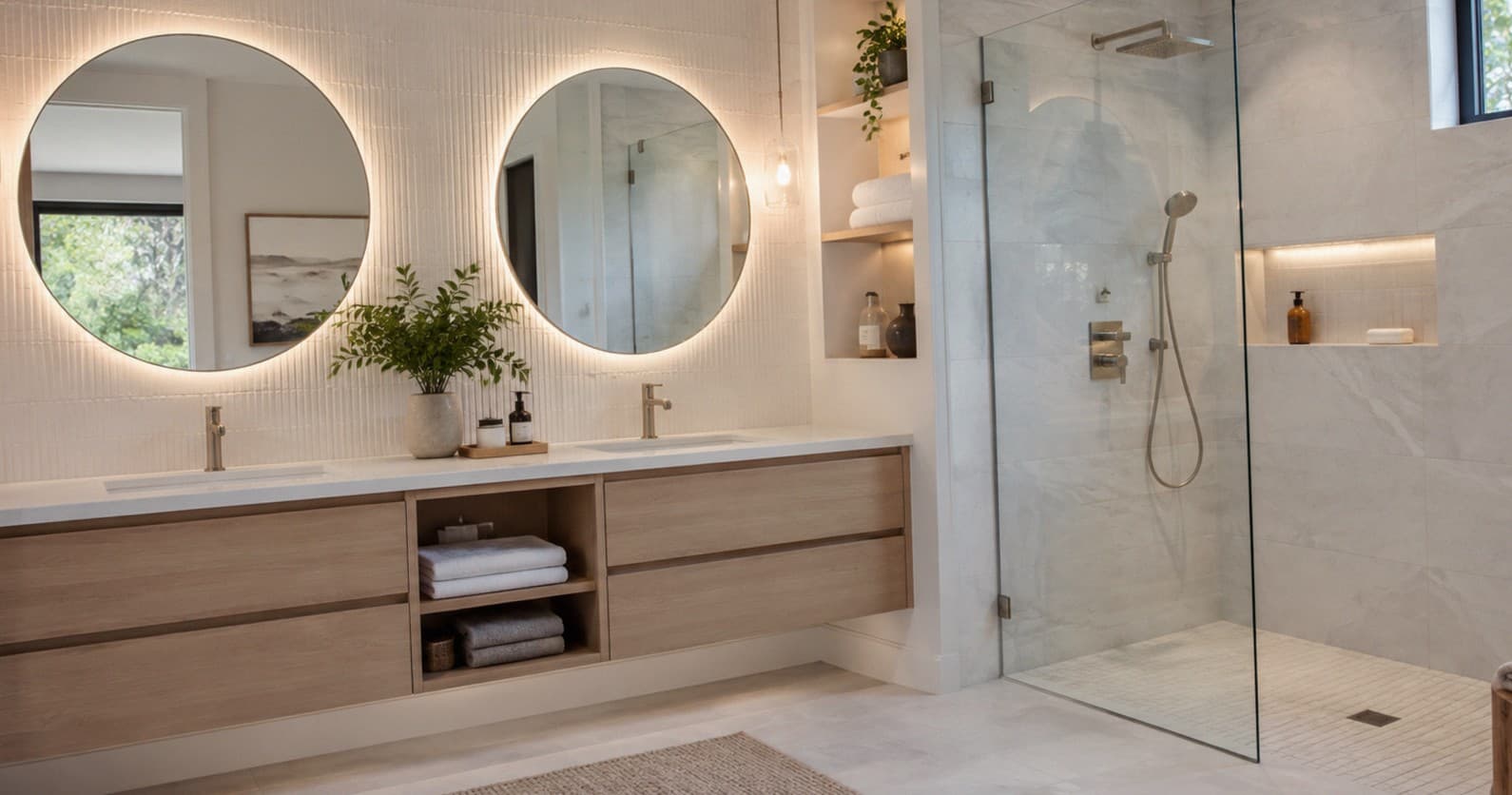
Modern, spa, transitional, and traditional bathroom styles each create a different look, but the best design still needs practical layout, lighting, storage, tile, and daily function.
* Bathroom Styles Explained: Modern, Spa & Transitional
* Bathroom style is one of the first things homeowners talk about during a remodel. Some people want a clean modern bathroom. Others want a calm spa-style retreat. Many want something softer and more timeless, like a transitional bathroom that does not feel too trendy.
* Bathroom style is not only about tile color or fixtures. It affects the layout, vanity, lighting, mirrors, shower glass, bathtub choice, storage, hardware, and how the room feels daily.
* For homeowners in Seattle, Kirkland, Bellevue, Redmond, Mercer Island, Sammamish, and the Eastside, the best bathroom style is the one that fits the home first. A bathroom should feel fresh and updated but also belong to the house.
* Fine Element Construction helps homeowners plan bathroom remodels with layout review, walk-in showers, curbless showers, tubs, vanities, tile, lighting, ventilation, waterproofing, plumbing coordination, permits, inspections, project management, and final finish details.
* Why Bathroom Style Matters
* A bathroom remodel is a long-term investment. The style you choose should still feel right several years from now.
* That does not mean every bathroom has to be plain. The design should be intentional. The tile, vanity, lighting, mirrors, shower, tub, and storage should all feel connected.
* A bathroom can be modern, spa-inspired, transitional, traditional, warm, minimal, bold, or simple. But if the layout is awkward, the lighting is poor, or the storage does not work, the style will not save the room.
* The best bathroom styles combine appearance with daily function.
* Start With the Home, Not the Trend
* Before choosing a style, look at the home.
* A modern bathroom can look beautiful in a newer home or remodeled Eastside property but may feel too sharp in an older home with softer character. A traditional bathroom may fit a classic Seattle home but can feel heavy if the room is small and lacks natural light.
* A spa-style bathroom can work in many homes because it focuses on calm materials, better lighting, and comfort. A transitional bathroom is often the safest middle ground because it blends clean lines with warmth and timeless details.
* The goal is not to copy a photo. The goal is to create a bathroom that feels right inside your home.
* Modern Bathroom Style
* A modern bathroom usually feels clean, simple, and uncluttered.
* Common features include straight lines, frameless glass, floating or flat-panel vanities, large-format tile, simple hardware, minimal trim, clean mirrors, and a limited color palette.
* Modern bathrooms often use white, gray, black, wood, concrete-look tile, stone-look surfaces, matte finishes, and simple lighting. The room may feel open, bright, and quiet.
* This style works well when the homeowner wants a bathroom that feels fresh, organized, and easy to visually understand.
* The risk is making the room feel cold. A modern bathroom still needs warmth. Wood tones, soft lighting, textured tile, natural stone looks, and good styling can keep the room from feeling sterile.
* When Modern Works Best
* Modern bathroom design works best when the layout is clean and the details are precise.
* A walk-in shower with clear glass, a simple vanity, a large mirror, and clean tile can make a modern bathroom feel larger and calmer. This style works well in smaller bathrooms because fewer visual breaks make the room feel more open.
* Modern bathrooms also work well in primary bathrooms where the homeowner wants a simple daily routine without too much visual clutter.
* The most important part is execution. Modern design does not hide mistakes. Uneven tile lines, awkward trim, poor lighting, or poorly placed fixtures stand out quickly.
* Modern Bathroom Materials
* Modern bathrooms often use simple materials with clean edges.
* Large-format tile can reduce grout lines. Quartz countertops can create a smooth vanity surface. Frameless glass can make the shower feel open. Matte black, brushed nickel, chrome, or soft brass fixtures can work depending on the rest of the design.
* Wood vanities can also work in modern bathrooms, especially when the goal is a Pacific Northwest feel rather than a cold showroom look.
* A modern bathroom should feel clean but not empty.
* Spa Bathroom Style
* A spa bathroom is designed to feel calm, comfortable, and relaxing.
* This style usually focuses on soft colors, warm lighting, natural textures, walk-in showers, freestanding tubs, gentle tile tones, wood vanities, greenery, soft towels, and a quieter overall mood.
* A spa-style bathroom does not need to look like a hotel. In a real home, a good spa bathroom should be practical. It needs storage, ventilation, lighting, durable surfaces, and easy cleaning.
* The best spa bathrooms feel restful because the layout works well and the materials do not fight each other.
* When Spa Style Works Best
* Spa-style design works especially well in primary bathrooms.
* A larger walk-in shower, curbless shower, freestanding tub, double vanity, warm wood cabinetry, and layered lighting can help the room feel more like a retreat.
* Spa style can also work in a smaller bathroom. The key is restraint. Soft tile, clear glass, a warm vanity, better lighting, and a clean mirror can make even a compact bathroom feel calmer.
* A spa bathroom should not be overloaded with decorative features. The feeling comes from space, light, texture, and comfort.
* Spa Bathroom Materials
* Spa bathrooms often use materials that feel natural.
* That can include stone-look tile, soft neutral colors, warm wood vanities, quartz or natural stone countertops, matte finishes, simple glass, and layered lighting.
* Lighting is especially important. A spa-style bathroom needs more than one bright overhead light. Vanity lighting, shower lighting, dimmers, backlit mirrors, and soft accent lighting can make the room feel more comfortable.
* Ventilation also matters. A bathroom cannot feel spa-like if it feels damp or does not dry properly.
* Transitional Bathroom Style
* A transitional bathroom blends traditional warmth with cleaner modern lines.
* It is one of the most useful bathroom styles because it works in many homes. It does not feel too modern, ornate, or trendy.
* Common transitional features include shaker-style vanities, clean tile, framed or simple mirrors, soft metal finishes, quartz countertops, classic lighting, simple trim, and balanced colors.
* A transitional bathroom may use modern shower glass and lighting but keep a warmer vanity and softer tile. It may feel updated without feeling extreme.
* For many Seattle and Eastside homes, transitional bathroom design is a strong choice because it fits older homes, newer homes, and homes that mix classic and modern elements.
* When Transitional Works Best
* Transitional style works best when the homeowner wants a bathroom that feels current but still timeless.
* It is a good option for guest bathrooms, hall bathrooms, primary bathrooms, and homes where resale flexibility matters.
* A transitional bathroom can feel warm, clean, and durable without leaning too far into one design trend. It gives homeowners more flexibility with fixtures, tile, mirrors, and lighting.
* This style is often easier to live with long term because it is not tied to one short design moment.
* Transitional Bathroom Materials
* Transitional bathrooms usually use materials that feel balanced.
* Shaker vanities, soft neutral tile, quartz countertops, brushed nickel, chrome, soft brass, framed mirrors, simple sconces, and glass shower doors can all work well.
* The design may include some traditional elements but they should be simplified. Too much trim, heavy molding, or ornate fixtures can make the room feel dated.
* The best transitional bathrooms feel calm, practical, and polished.
* Traditional Bathroom Style
* Traditional bathroom design is warmer, more detailed, and more classic.
* This style may include furniture-style vanities, framed mirrors, crown molding, classic tile, polished fixtures, marble looks, decorative lighting, and softer shapes.
* Traditional bathrooms can work beautifully in older Seattle homes or homes with classic architecture. They can feel elegant and familiar when the details are handled well.
* The risk is making the room feel too heavy or outdated. Traditional does not have to mean old-fashioned. The strongest traditional bathrooms usually simplify the details and pair classic materials with updated lighting and modern waterproofing.
* When Traditional Works Best
* Traditional bathroom style works best when it matches the home.
* If the house has classic trim, traditional architecture, or a more formal interior style, a traditional bathroom may feel natural. It can also work well in powder baths because small spaces can handle more character.
* Traditional style may not be the best choice for every primary bathroom or small bathroom, especially if the room needs to feel brighter and more open.
* The key is proportion. Traditional details should add character, not crowd the room.
* Traditional Bathroom Materials
* Traditional bathrooms often use marble-look tile, classic subway tile, furniture-style vanities, framed mirrors, soft metal finishes, and decorative lighting.
* A traditional bathroom can still use modern materials. Quartz countertops, improved ventilation, better lighting, waterproofing systems, and updated plumbing fixtures can make the room function better while keeping a classic look.
* This is where a good remodel balances style with construction quality.
* Modern vs. Spa Bathroom
* Modern and spa bathrooms can overlap, but they are not the same.
* A modern bathroom focuses more on clean lines, minimal details, and a simple visual structure. A spa bathroom focuses more on comfort, warmth, and a calming feeling.
* A modern bathroom may use sharper contrast, flat-panel cabinetry, large-format tile, and minimal fixtures. A spa bathroom may use softer tones, natural textures, warmer lighting, and a more relaxing layout.
* Many homeowners want a blend: modern enough to feel clean, but warm enough to feel comfortable.
* That can be a strong direction for Seattle-area homes.
* Spa vs. Transitional Bathroom
* A spa bathroom is about mood. A transitional bathroom is about balance.
* A spa-style bathroom may use soft tile, warm light, a large shower, natural textures, and a calming palette. A transitional bathroom may use shaker cabinetry, classic lighting, quartz countertops, and simple tile that feels timeless.
* The two styles can work together. A transitional bathroom can include spa elements, such as better lighting, a larger shower, softer tile, and warm wood details.
* This combination often works well when the homeowner wants the bathroom to feel relaxing but not too trendy.
* Modern vs. Transitional Bathroom
* Modern bathrooms are cleaner and more minimal. Transitional bathrooms are softer and more flexible.
* A modern bathroom may feel more architectural. A transitional bathroom may feel more connected to the rest of a traditional or mixed-style home.
* If the home already has classic trim, warm wood floors, or traditional details, a transitional bathroom may fit better. If the home has cleaner lines, open spaces, and a more contemporary interior, modern may feel natural.
* The right choice depends on the home.
* How to Choose the Right Bathroom Style
* Start with the room’s purpose.
* A primary bathroom can usually support more comfort, storage, and spa-inspired details. A guest bathroom should be durable, easy to clean, and welcoming. A powder bath can handle more personality because it is small and does not include a shower or tub.
* Then look at the home’s overall style. The bathroom should feel updated, but not disconnected.
* Finally, think about daily use. Do you need more storage? Easier cleaning? Better lighting? A walk-in shower? A bathtub? A calmer morning routine?
* The right style should answer those questions.
* Bathroom Style and Resale
* For resale, the safest bathroom styles are usually clean, timeless, and well built.
* That does not mean boring. It means avoiding choices that are too personal, too trendy, or too hard to maintain.
* Modern bathrooms can help a home feel updated. Spa bathrooms can make a primary bathroom feel more desirable. Transitional bathrooms often appeal to a wide range of buyers. Traditional bathrooms can work well when they fit the home’s character.
* Resale depends on the whole bathroom: layout, tile, lighting, shower, vanity, ventilation, storage, and quality of installation.
* Style alone is not enough.
* Bathroom Style and Budget
* Bathroom style can affect budget.
* Modern bathrooms may need very clean tile work, precise glass, and simple details done well. Spa bathrooms may include larger showers, freestanding tubs, layered lighting, and natural-looking materials. Transitional bathrooms can be more flexible because they work with many cabinet, tile, and fixture options. Traditional bathrooms may require more trim, detailed vanities, or classic finishes.
* The cost is not only about the style name. It depends on the scope.
* A simple modern bathroom can cost less than a complex traditional bathroom. A spa bathroom can be modest or premium depending on materials and layout. A transitional bathroom can be budget-conscious or high-end.
* The best approach is to choose the style first, then decide where the budget should go.
* Bathroom Style and Lighting
* Lighting changes every bathroom style.
* A modern bathroom needs clean, even lighting so the simple lines feel intentional. A spa bathroom needs softer layers so the room feels calm. A transitional bathroom needs balanced vanity and ambient lighting. A traditional bathroom often benefits from warmer sconces or decorative fixtures.
* Lighting should be planned with the mirror, vanity, shower, tub, and tile.
* A bathroom can have the right materials and still feel wrong if the lighting is poor.
* Bathroom Style and Tile
* Tile is one of the biggest style decisions in a bathroom remodel.
* Modern bathrooms often use large-format tile, simple patterns, or clean stone looks. Spa bathrooms often use soft neutral tile, natural textures, and calming tones. Transitional bathrooms often use classic shapes with updated colors and layouts. Traditional bathrooms may use subway tile, marble looks, mosaics, or more decorative details.
* The best tile choice should support the style without overwhelming the room.
* Too many tile patterns can make any bathroom feel busy.
* Bathroom Style and Vanity Choice
* The vanity sets the tone for the bathroom.
* A floating or flat-panel vanity can make a bathroom feel modern. A warm wood vanity can support spa or Pacific Northwest design. A shaker vanity can work well in transitional bathrooms. A furniture-style vanity can support traditional design.
* The vanity also needs to work practically. Drawers, counter space, sink placement, storage, and cleaning all matter.
* A beautiful vanity that does not support daily routines will become frustrating quickly.
* Bathroom Style and Shower Design
* The shower can define the entire bathroom.
* Modern bathrooms often use frameless glass, simple tile, and clean hardware. Spa bathrooms may use larger walk-in showers, benches, niches, hand showers, or curbless entries. Transitional bathrooms may use a clean glass shower with warmer tile and classic fixtures. Traditional bathrooms may use more framed details, classic tile, or softer fixture shapes.
* No matter the style, the shower needs proper waterproofing, slope, drainage, ventilation, and glass planning.
* A shower should look good and work reliably.
* Portfolio Examples to Add Before Publishing
* This article should include real project examples before it goes live.
* Add one project for each style section if possible:
* Modern bathroom project:
[PORTFOLIO LINK: add real modern bathroom project here]
* Spa-style bathroom project:
[PORTFOLIO LINK: add real spa-style bathroom project here]
* Transitional bathroom project:
[PORTFOLIO LINK: add real transitional bathroom project here]
* Traditional or classic bathroom project:
[PORTFOLIO LINK: add real traditional/classic bathroom project here]
* These links are important because style articles are much stronger when readers can see real work, not just read descriptions.
* Common Bathroom Style Mistakes
* One common mistake is choosing a style that does not fit the home.
* Another mistake is mixing too many styles in one room. A modern vanity, traditional mirror, busy tile, rustic light fixture, and bold hardware can all look good separately but feel confused together.
* A third mistake is choosing style before solving layout, storage, lighting, and ventilation.
* The best bathroom remodels start with function, then build the style around it.
* Bathroom Styles in Seattle and the Eastside
* Fine Element Construction provides bathroom remodeling and renovation services across the Greater Seattle Area, including Seattle, Kirkland, Bellevue, Redmond, Mercer Island, Sammamish, and nearby Eastside communities.
* Our team helps with modern bathrooms, spa-style bathrooms, transitional bathrooms, traditional bathrooms, walk-in showers, curbless showers, tubs, vanities, tile, lighting, mirrors, ventilation, waterproofing, plumbing coordination, permits, inspections, project management, and final walkthroughs.
* A bathroom style should make the room feel better, not just different. The right design should fit the home, support daily use, and still feel right years from now.
* Thinking about remodeling your bathroom? Contact Fine Element Construction to compare bathroom styles, review your layout, and plan a bathroom that fits your home and the way you live.