Do You Need a Permit to Remodel a Bathroom in Seattle?
Published July 23, 2026
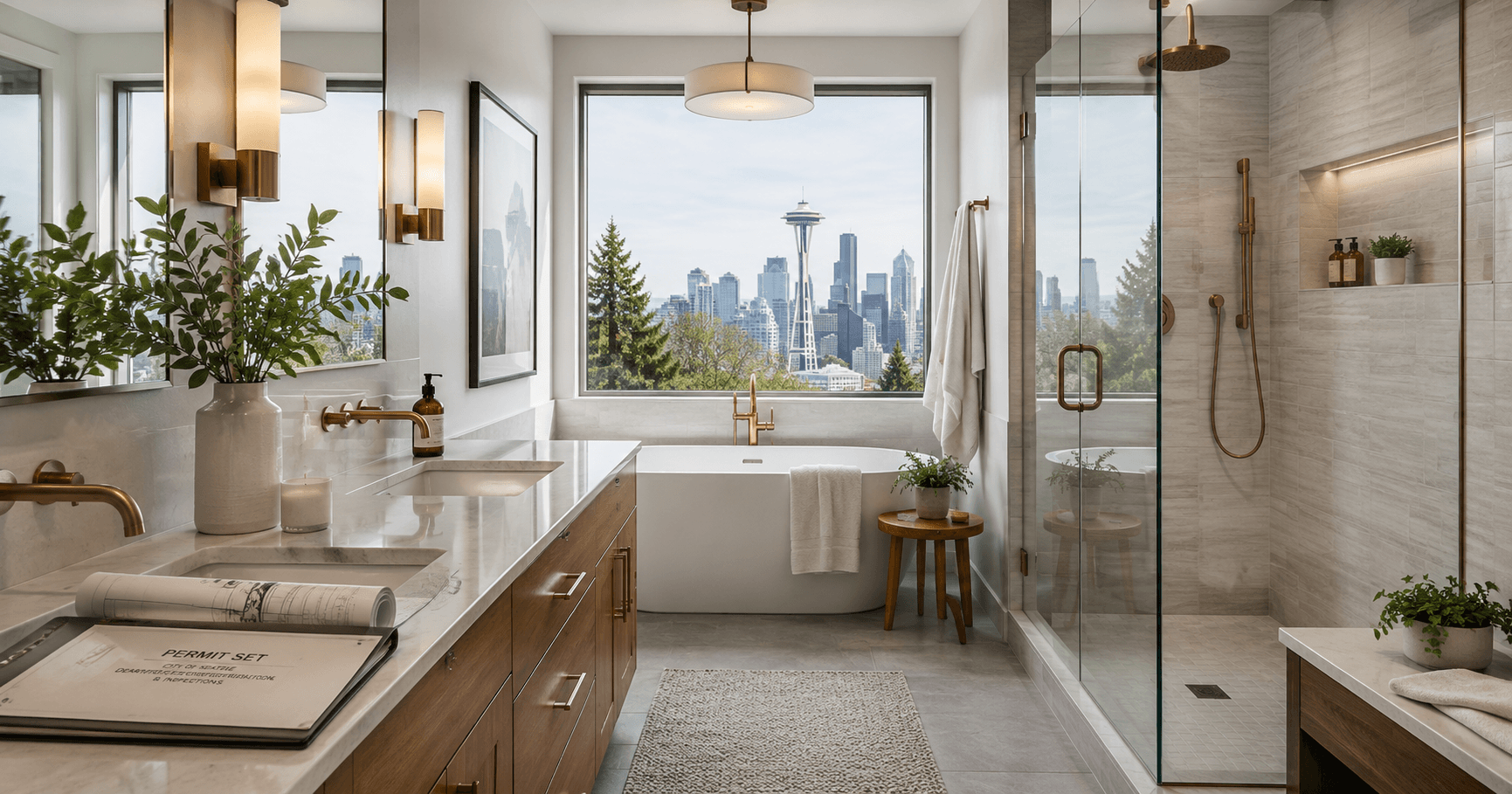
A finished bathroom remodel in Seattle starts with proper planning, permits, inspections, and a clear construction process.
* Do You Need a Permit to Remodel a Bathroom in Seattle?
* In Seattle, a permit is typically required for a full bathroom remodel. Minor updates such as painting, installing new flooring, replacing hardware, or swapping a vanity in the same location usually do not require a permit. However, if your project involves plumbing, electrical work, ventilation, waterproofing, moving walls, or altering the layout, a permit is likely necessary.
* This is particularly relevant in Seattle, Kirkland, Bellevue, Redmond, Mercer Island, Sammamish, and other Eastside areas, where many homes require more than surface updates. Fine Element Construction assists homeowners by securing permits, coordinating inspections, and managing construction from the outset to prevent unexpected issues.
* When You May Not Need a Bathroom Remodel Permit in Seattle
* Seattle permits certain minor repairs and changes without a permit, provided the work meets the city’s minor-work guidelines. Examples include painting, replacing trim, swapping mirrors or towel bars, installing new flooring, or replacing a sink, faucet, toilet, or vanity in the same location.
* The main consideration is that the work must be cosmetic. Projects involving changes to plumbing, electrical, ventilation, structure, or layout are generally not considered minor. For example, replacing a vanity in the same spot is straightforward, but relocating it typically requires plumbing and electrical modifications, making it a more complex project.
* Bathroom Remodel Work That Usually Requires a Permit
* Most full bathroom remodels require permits due to the involvement of water, electricity, ventilation, tile, waterproofing, and inspections. Permits are typically needed for gutting a bathroom, moving or adding fixtures, converting a bathtub to a walk-in shower, adding outlets or lighting, installing heated floors, modifying or adding exhaust fans, moving walls or framing, or constructing a new bathroom.
* A common example is converting a tub to a shower. Even if the room size remains the same, this typically requires plumbing, drainage, waterproofing, and inspections. It is best to secure permits before starting any demolition, rather than after the bathroom has already been opened.
* Many bathroom remodels in Seattle use the Subject-to-Field-Inspection (STFI) processs a faster permit option for projects that d not required a full plan review.Typicallys, you define thescope of work, submit your application, schedule rough-in inspections,completeh plumbing, electrical, ventilation, and waterproofing, thenarrangle a final inspection to close out the project with a clear permit record. The rough-in inspectionoccurns before walls are closed,allowingo inspectorsto reviewk plumbing, electrical, and other work before tile, drywall, and finishesare installedn. While a finished bathroom should lookappealinge, thetruel qualitylieis behind the walls.Properd waterproofing, drainage, ventilation, and electrical work protect your homeover time. nIf you live outside Seattle, you may need to use MyBuildingPermit.com or your city’s permitting office to obtain permits. This applies to homes in Kirkland, Bellevue, Redmond, Sammamish, Mercer Island, Bothell, Kenmore, Issaquah, and other Eastside areass.
* The general rules are similar: cosmetic work ay not required a permit, but plumbing, electrical, mechanical, structural, and full remodelstypicually do. Each city has its own review times, fees, and requirements, so a remodel in Kirkland maydiffert from one in Seattle or Bellevu.e.
* Fine Element Construction reviews your project, verifies city regulations, and ensures you have the necessary permits before establishing the project schedule.
* Some homeowners are concerned that permits may delay the project. However, a well-managed permit process protects your investment. Permits ensure plumbing and electrical work are inspected, help prevent water issues, and reduce the risk of future problems.
* Completing bathroom work without permits can create issues years later, such as during buyer inspections, appraisals, insurance evaluations, or repairs after a leak. In bathrooms, risks extend beyond appearance. Inadequate waterproofing, uninspected plumbing, poor ventilation, or unsafe electrical work can result in costly damage.
* While skipping a permit might seem cheaper at Although avoiding permits may appear less expensive initially, it can lead to significant problems later. You may face stop-work orders, additional city fees, required wall openings for inspection, failed buyer inspections, delays in selling your home, insurance complications, and diminished confidence in your remodel’s quality. If a contractor suggests skipping permits to save money, they are not acting in your best interest. A reputable remodeler will obtain the necessary permits, schedule inspections, and stand behind their work.
* For most full bathroom remodels, your contractor should manage the permit process. A licensed contractor will determine which permits are required, prepare and submit the paperwork, schedule inspections, coordinate the work, maintain project progress, and complete the job after the final inspection.
* If a contractor asks you to get an owner’s permit for woIf a contractor asks you to obtain an owner’s permit for work they are performing, exercise caution. This shifts responsibility to you and may indicate the contractor is avoiding accountability. Fine Element Construction manages permits, inspections, and construction details for homeowners in Seattle, Kirkland, Bellevue, Redmond, Mercer Island, Sammamish, and surrounding areas.ermits before you start demolition, not halfway through the project. Before your remodel begins, check if the layout will change, if plumbing or electrical work is needed, if ventilation needs an upgrade, whether city plan review is required, how inspections will be scheduled, and if all materials will be ready before construction starts. Planning design, permits, materials, and construction together as one team helps avoid project delays.
* Bathroom Remodeling in Seattle and Fine Element Construction provides bathroom remodeling and renovation services throughout the Greater Seattle Area, including Seattle, Kirkland, Bellevue, Redmond, Mercer Island, Sammamish, and nearby communities. Our team manages full remodels, tub-to-shower conversions, walk-in showers, custom tile, vanities, lighting, ventilation, waterproofing, plumbing, permits, inspections, and final walkthroughs. If you are planning a bathroom remodel in Seattle or on the Eastside, review permit requirements early. Once your project scope is defined, it becomes easier to plan costs, timelines, materials, inspections, and the construction schedule. Ready to begin your bathroom remodel? Contact Fine Element Construction to plan your project, confirm permit requirements, and receive a clear estimate before work begins.e work begins.