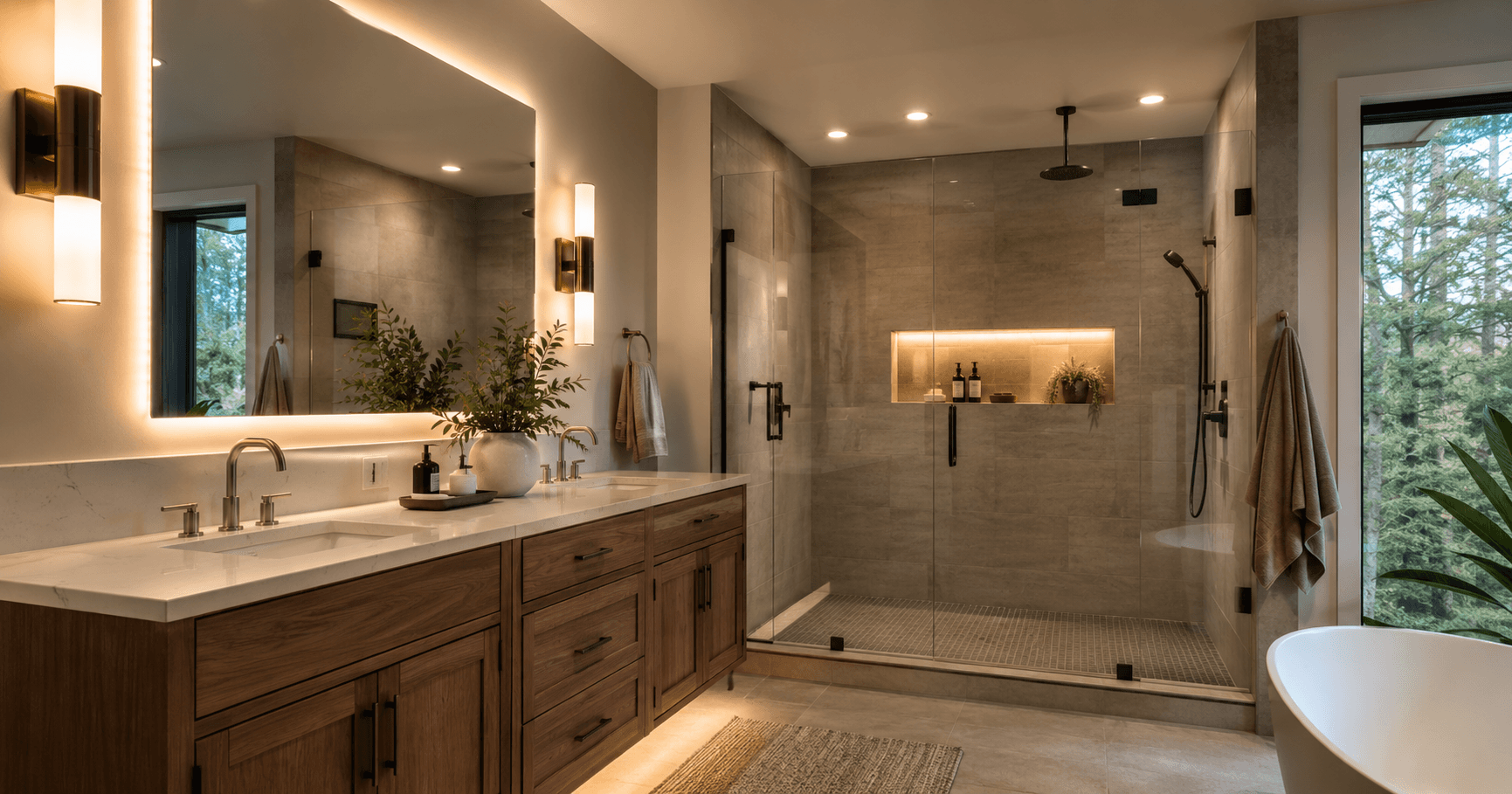
A well-planned bathroom lighting design combines task, ambient, and accent layers so the room feels brighter, more comfortable, and easier to use every day.
* Bathroom Lighting Guide: Task, Ambient & Accent Layers
* Bathroom lighting can completely change how a remodel feels. The same bathroom can feel flat, dark, and unfinished with poor lighting, or calm, clean, and high-end with the right lighting plan.
* For homeowners in Seattle, Kirkland, Bellevue, Redmond, Mercer Island, Sammamish, and the Eastside, bathroom lighting is especially important because natural light varies throughout the year. A bathroom should work well on a bright summer morning, a dark winter evening, and every day in between.
* The best bathroom lighting usually combines three layers: task lighting, ambient lighting, and accent lighting. Each layer has a different job. When they are planned together, the bathroom feels more balanced, more useful, and more comfortable.
* Fine Element Construction helps homeowners plan bathroom remodels with vanities, mirrors, tile, showers, lighting, ventilation, waterproofing, plumbing coordination, electrical work, permits, inspections, project management, and final finish details.
* Why Bathroom Lighting Matters
* Bathroom lighting is not just decoration. It affects daily routines, safety, comfort, cleaning, and the way materials look.
* Good lighting helps with shaving, skincare, makeup, brushing teeth, showering, cleaning, and nighttime use. It can make the room feel larger, brighter, warmer, and more finished.
* Poor lighting can create shadows around the face, make tile look dull, make a vanity feel dark, or make a beautiful remodel feel incomplete.
* Lighting should be planned early in the remodel, not added at the end. Mirror size, vanity width, ceiling height, shower layout, niche placement, tile design, and electrical locations affect the final lighting plan.
* The Three Main Bathroom Lighting Layers
* A good bathroom lighting plan usually has three layers.
* Task lighting helps with daily routines. It is the light you need at the vanity, mirror, shower, and other work areas.
* Ambient lighting provides general room brightness. It helps the whole bathroom feel visible, comfortable, and easy to move through.
* Accent lighting adds depth, warmth, and design detail. It can highlight a shower niche, backlit mirror, tile wall, floating vanity, freestanding tub, or architectural feature.
* A bathroom with only one light source usually feels unfinished. A bathroom with layered lighting feels more intentional.
* Task Lighting
* Task lighting is the most practical layer.
* In a bathroom, the most important task lighting is usually around the vanity and mirror. This is where people shave, apply makeup, do skincare, brush teeth, and get ready for the day.
* Good vanity lighting should reduce shadows on the face. A single overhead light can create shadows under the eyes, nose, and chin. Wall sconces, vertical mirror lighting, backlit mirrors, or properly placed vanity lights can make a big difference.
* Task lighting may also include shower lighting, especially in larger showers, walk-in showers, or darker bathrooms. A shower should not feel like a dark corner of the room.
* Vanity Lighting
* Vanity lighting should be planned with the mirror, sink, faucet, and countertop.
* If the mirror is wide, the light should support the full vanity area. If there are two sinks, the lighting should work for both people. If the mirror is tall or framed, the fixture placement needs to be planned before walls are finished.
* Wall sconces on both sides of the mirror provide balanced face lighting. A horizontal fixture above the mirror can work but needs careful selection and placement. A backlit mirror adds a soft modern look but may still need additional task lighting depending on bathroom use.
* The goal is not only to make the vanity look beautiful. The goal is to make the vanity useful every day.
* Backlit Mirrors
* Backlit mirrors are popular because they create a clean, modern look.
* They can make the bathroom feel softer and more premium. They also help the mirror area feel more intentional, especially in a primary bathroom or powder room.
* A backlit mirror works best as part of a full lighting plan. On its own, it may create a nice glow but not enough direct task lighting for every homeowner.
* If the bathroom is used for detailed grooming, shaving, or makeup, backlit mirrors may need to be paired with sconces, ceiling lighting, or other task lighting.
* Shower Lighting
* Shower lighting is easy to forget, but it matters.
* A walk-in shower without dedicated light can feel darker than the rest of the bathroom, especially if it has full-height tile, a wall return, or glass placement that blocks light.
* Shower lighting can make the space feel safer, cleaner, and more comfortable. It also helps show off the tile, niche, fixtures, bench, and glass.
* In wet areas, the right fixture type and electrical planning matter. Shower lighting should be discussed during the design stage so it works with the ceiling, ventilation, tile layout, and shower glass.
* Ambient Lighting
* Ambient lighting is the general lighting for the bathroom.
* This can include recessed ceiling lights, ceiling-mounted fixtures, or other lighting that makes the whole room feel bright enough.
* Ambient lighting should not be too harsh. A bathroom needs good visibility but should not feel like a medical exam room. The right brightness, placement, and dimming control make the room feel more comfortable.
* In a small bathroom, ambient lighting may be simple. In a larger primary bathroom, it may need several fixtures spread across the room so the vanity, shower, tub, and walking areas feel balanced.
* Accent Lighting
* Accent lighting adds mood and depth.
* This may include a lit shower niche, under-vanity lighting, backlit mirror, wall washing, toe-kick lighting, lighted shelves, or soft lighting near a freestanding tub.
* Accent lighting is not usually the main source of light. It is there to make the bathroom feel more finished and comfortable.
* A lit niche can make a shower feel custom. Under-vanity lighting can make a floating vanity feel lighter. A backlit mirror softens the room in the evening. Accent lighting works best when subtle and integrated into the design.
* Lit Shower Niches
* A lit shower niche can be a beautiful feature when it is done correctly.
* It adds soft light inside the shower and highlights the tile detail. It can also make the niche easier to use without adding clutter.
* But a lit niche needs careful planning. The niche location, waterproofing, electrical work, tile layout, fixture type, and access for future service all need to be considered.
* A niche should not be added just because it looks good in a photo. It should fit the shower layout and be built properly to keep the wet area protected.
* Lighting and Tile
* Lighting changes how tile looks.
* Tile that looks warm and soft in the showroom may look flat or cold under the wrong light. Glossy tile reflects light differently than matte tile. Textured tile creates shadows that look beautiful when lighting is planned well.
* This is especially important in showers, feature walls, and vanity backsplashes. If lighting is too harsh or at the wrong angle, it shows every uneven surface. If lighting is too weak, the tile loses its depth.
* Lighting and tile should be planned together, not separately.
* Lighting and Countertops
* Bathroom lighting also affects the countertop.
* Quartz, marble, quartzite, porcelain, and other countertop materials can look very different depending on the lighting. Veining, color, shine, and texture all respond to light.
* Good vanity lighting helps the countertop feel clean and finished. Poor lighting can make even a premium countertop look dull.
* If the bathroom has a double vanity, stone or quartz countertop, large mirror, and warm wood cabinetry, the lighting should support the full composition. The vanity area is often the visual center of the bathroom and deserves careful planning.
* Lighting and Mirrors
* Mirrors multiply light, so their size and placement matter.
* A larger mirror can make a small bathroom feel bigger and brighter. A pair of mirrors can work well over a double vanity. A backlit mirror can create a soft glow, while framed mirrors with sconces can feel more traditional or transitional.
* The mirror should not be selected after the electrical plan is finished. Mirror size affects fixture placement, outlet location, sconce spacing, and the overall look of the wall.
* A mirror, vanity, lighting, and countertop should be planned as one design area.
* Small Bathroom Lighting
* Small bathrooms need good lighting because they can feel dark or tight very quickly.
* A small bathroom may benefit from a larger mirror, clear shower glass, bright neutral tile, vanity lighting, and simple ceiling lighting. The goal is to reduce shadows and make the room feel open.
* Too many decorative fixtures can make a small bathroom feel crowded. A simpler lighting plan usually works better.
* In a compact bathroom, every light should have a purpose.
* Primary Bathroom Lighting
* A primary bathroom usually needs more lighting layers than a small hall bathroom.
* It may include double vanity lighting, recessed ambient lighting, shower lighting, tub lighting, accent lighting, a backlit mirror, or niche lighting.
* Because primary bathrooms are used every day, they should support both morning and evening routines. Bright task lighting may be useful in the morning. Softer dimmed lighting may feel better at night.
* This is why dimmers and lighting zones can be helpful in a primary bathroom remodel.
* Dimmers and Lighting Zones
* Dimmers can make bathroom lighting more flexible.
* A bathroom does not always need full brightness. Bright light may be useful for cleaning and getting ready. Softer light may be better for evening routines or a spa-like primary bathroom.
* Lighting zones can also help. Vanity lights, shower lights, ceiling lights, and accent lights may not all need to turn on together.
* A better lighting plan gives the homeowner control instead of forcing the same brightness every time.
* Bathroom Lighting Mistakes to Avoid
* One common mistake is relying on one ceiling light for the entire bathroom.
* Another mistake is placing light only above the mirror, creating shadows on the face. Poor shower lighting is also common, especially in larger walk-in showers.
* Some bathrooms have too much decorative lighting and not enough practical lighting. Others have fixtures that look good but do not provide enough useful light.
* It is a mistake to choose lighting after tile, mirrors, cabinets, and electrical rough-in are decided. Lighting should be part of the remodel plan from the beginning.
* Bathroom Lighting and Electrical Planning
* Bathroom lighting requires electrical planning.
* Fixture locations, switch locations, dimmers, mirror wiring, shower lights, niche lights, ventilation, outlets, and heated floor systems must be coordinated before walls are closed.
* Depending on the project scope, electrical work may require permits or inspections. Requirements can vary by city and by remodel scope.
* A professional remodeling process should plan lighting with the rest of the bathroom systems so the finished room looks good and works safely.
* Bathroom Lighting in Seattle and the Eastside
* Fine Element Construction provides bathroom remodeling and renovation services across the Greater Seattle Area, including Seattle, Kirkland, Bellevue, Redmond, Mercer Island, Sammamish, and nearby Eastside communities.
* Our team helps with bathroom lighting, backlit mirrors, lit niches, vanity lighting, shower lighting, tile, mirrors, countertops, vanities, ventilation, waterproofing, plumbing coordination, electrical planning, permits, inspections, project management, and final walkthroughs.
* The best bathroom lighting plan combines task, ambient, and accent layers. It should make the room easier to use, more comfortable, and more complete.
* Thinking about remodeling your bathroom? Contact Fine Element Construction to review your layout, compare lighting options, and plan a bathroom that feels bright, calm, and finished.